 11
11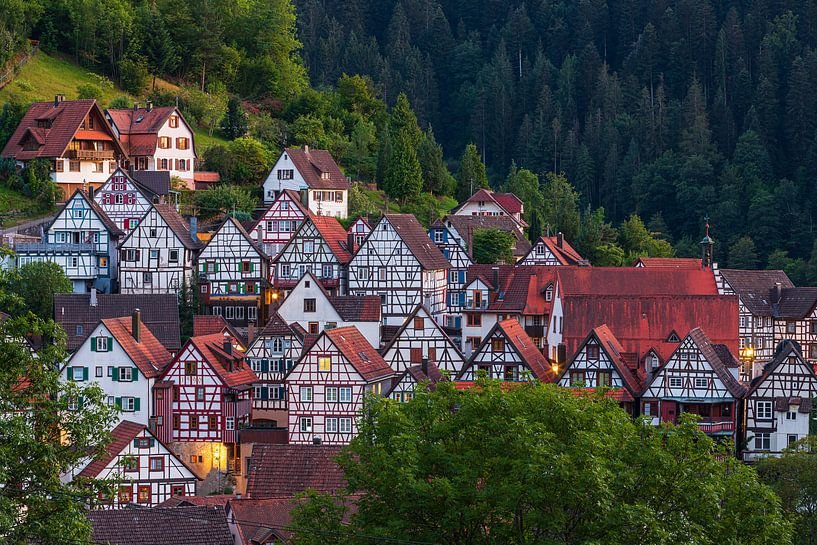
In the heart of Germany’s historic towns and villages, where cobblestone streets wind between leaning facades and flower boxes overflow with vibrant geraniums, one architectural form stands out as an enduring emblem of the nation’s cultural identity: the half-timbered house. Known in German as Fachwerkhäuser, these structures feature an exposed wooden frame filled with materials like wattle and daub, brick, or plaster, creating a striking contrast of dark beams against lighter infills. Often painted in cheerful hues of ochre, crimson, and sage, with intricate carvings and overhanging upper stories, they evoke the pages of a Brothers Grimm fairy tale. To millions of visitors and locals alike, half-timbered houses are not merely buildings but living symbols of Germany’s medieval and Renaissance heritage, representing craftsmanship, community resilience, and a deep connection to the forested landscapes that once supplied their timber.
The term “half-timbered” derives from the practice of splitting logs lengthwise to form the structural beams, a technique that maximized the use of scarce hardwood resources. In Portuguese, they are called casas enxaimel, a term that captures the same essence of interwoven timber lattices. Across Germany’s historical neighborhoods—from the rolling hills of Hesse to the Harz Mountains—these houses cluster in dense, harmonious ensembles that define entire districts. With an estimated 2 to 2.5 million examples still standing nationwide, they form the backbone of preserved old towns and serve as a testament to centuries of architectural evolution.
What makes these houses such potent symbols? They embody the vernacular spirit of German building traditions, born from necessity in an era when stone was expensive and forests abundant. Their construction allowed for rapid assembly by skilled carpenters, fostering tight-knit communities where homes doubled as workshops, markets, and social hubs. Today, they symbolize continuity amid change: surviving wars, industrialization, and modernization, they remind us of a pre-industrial Germany where craftsmanship was paramount. Walking through a half-timbered neighborhood feels like stepping into history, where every beam tells a story of local pride and ingenuity. This article explores their origins, techniques, regional diversity, iconic examples, cultural resonance, and ongoing preservation, revealing why Fachwerk remains the quintessential face of Germany’s historic bairros.
✅ Also Read: Reinheitsgebot: The 1516 Law That Revolutionized Beer Flavor
The roots of half-timbered construction stretch back to the Middle Ages, with evidence of similar timber-framing techniques appearing in Germanic regions as early as the 12th century. While some scholars trace early influences to Roman wooden structures or even earlier Saxon methods, the true flourishing of Fachwerk in Germany occurred between the 14th and 18th centuries. The oldest surviving examples date to the 13th and 14th centuries, such as a house documented in Marburg around 1320 or structures in Wetzlar from 1356. These early buildings emerged in a Europe recovering from the Black Death and feudal upheavals, where timber was plentiful in the dense woodlands of Central Europe.
By the 15th century, half-timbered houses had become widespread in both rural and urban settings. Carpenters, organized into guilds, refined the craft, using mortise-and-tenon joints secured by wooden pegs rather than nails—a technique that allowed flexibility against settling ground and seismic activity. The style spread across the Holy Roman Empire, influencing neighboring regions in France (as maison à colombages) and England (Tudor style), but it achieved its densest expression in German-speaking lands. In northern Germany, Hanseatic trade wealth funded elaborate urban examples, while central regions saw ornamental flourishes reflecting prosperity from mining and agriculture.
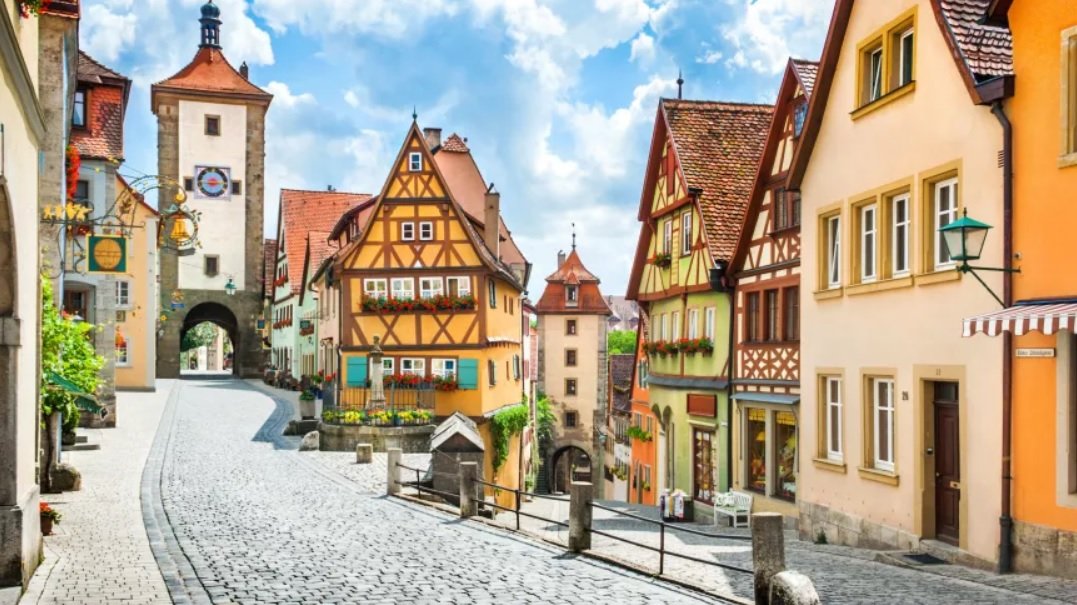
The 16th century marked a golden age during the Renaissance, when half-timbered designs incorporated decorative elements like carved inscriptions, heraldic motifs, and biblical scenes. Houses often featured ground floors of stone or brick to protect against moisture and fire, with upper stories cantilevered outward to maximize interior space—a practical response to narrow medieval plots and rising urban densities. This era coincided with the Reformation, and many Fachwerk facades bore Protestant symbols or dates commemorating family milestones. The Thirty Years’ War (1618–1648) disrupted construction, but post-war rebuilding in the 17th and 18th centuries introduced Baroque influences, such as curved gables and richer color palettes.
Industrialization in the 19th century posed the first major threat. Mass-produced bricks and iron frames offered cheaper alternatives, leading to a decline in new Fachwerk builds. Yet, Romanticism revived interest, with intellectuals and artists idealizing these houses as emblems of authentic German Volkskultur. Preservation societies formed, and by the early 20th century, many towns enacted protections. World War II bombings devastated some areas, but post-1945 reconstruction prioritized authenticity, restoring thousands of structures. Today, half-timbered houses symbolize not just medieval engineering but a national narrative of endurance, from the Holy Roman Empire through unification under Bismarck to modern reunification. Their evolution mirrors Germany’s own: adaptive, resilient, and deeply rooted in place.
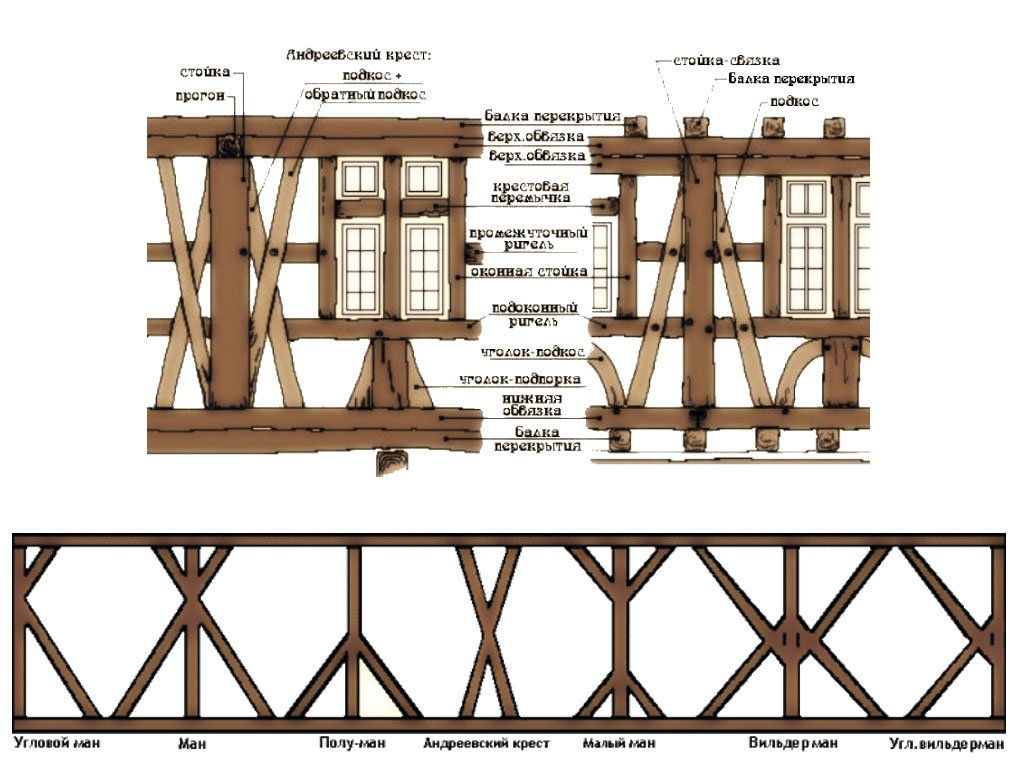
At the core of every half-timbered house lies a post-and-beam skeleton, typically oak or pine, assembled on-site like a giant puzzle. Carpenters first erected the frame on a stone plinth or brick foundation—essential for warding off dampness and rot in Germany’s variable climate. Vertical posts (stiles) supported horizontal beams (rails), with diagonal braces providing stability against wind and settlement. The spaces between, or panels, were infilled with non-load-bearing materials, a hallmark that gave the style its name and versatility.
Traditional infill varied by region and era. In earlier centuries, wattle and daub—woven hazel or willow branches plastered with a mix of clay, straw, and animal dung—was common, offering insulation and breathability. By the 15th century, brick nogging became prevalent, especially in the north, where fired clay provided fire resistance and durability. Plaster over lath created smooth, paintable surfaces in central areas, while some southern examples used stone rubble. Roofs were typically steep-pitched and covered in clay tiles or thatch, designed to shed heavy snow and rain.
Construction was a communal affair. A master carpenter oversaw the raising of the frame in a single day, often celebrated with a Richtfest (topping-out ceremony) involving a wreath and feasting. Joinery relied on precise hand-cut mortises, tenons, and dovetails, with no metal fasteners in original builds—enhancing earthquake resistance through slight give. Decorative elements included exposed braces forming geometric patterns like the “St. Andrew’s cross” or “wild man,” which doubled as structural supports and artistic statements. Carvings of mythical creatures, dates, or proverbs adorned gables, reflecting owners’ status or warding off evil.
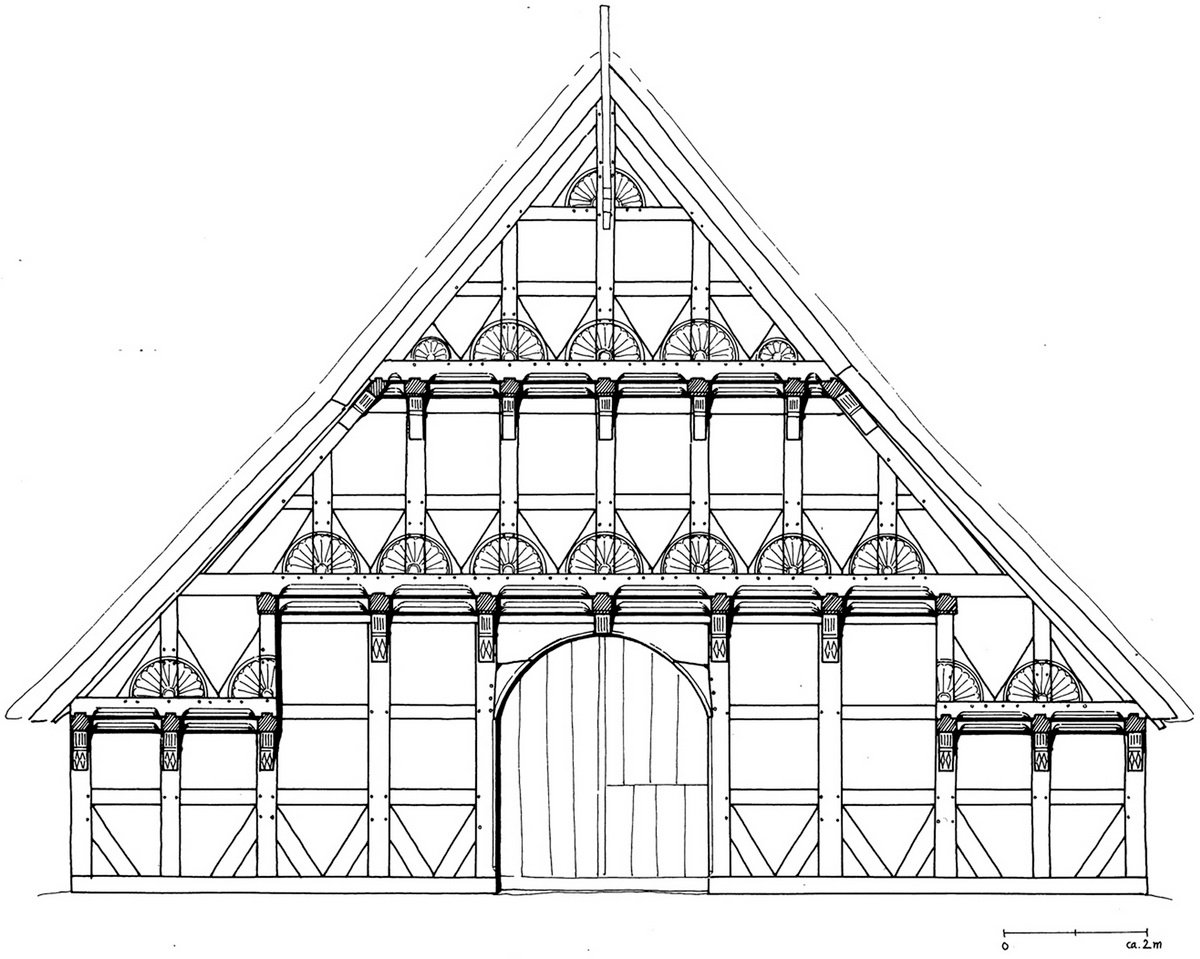
Modern restorations maintain these techniques while incorporating updates like insulated glazing and treated timber for longevity. Yet the original ethos persists: sustainability through local materials and modular design. A single Fachwerk house could last 500 years or more, outpacing many contemporary builds in resilience. This efficiency—using minimal resources for maximum space—made the style ideal for Germany’s resource-conscious past and inspires eco-friendly adaptations today.
Germany’s half-timbered houses exhibit remarkable diversity, shaped by local climate, materials, and cultural traditions. In northern Germany, particularly Lower Saxony and Schleswig-Holstein, structures are robust and practical. Brick infill dominates, reflecting proximity to clay deposits and Hanseatic trade. Houses often feature simpler geometries with fewer overhangs, suited to flat landscapes and strong winds. Towns here emphasize uniformity, with whitewashed or red-brick panels creating a clean, maritime aesthetic.
Central Germany, encompassing Hesse, Thuringia, and Saxony-Anhalt, showcases the most ornate styles. Beams form elaborate patterns—diamonds, swirls, and heraldic motifs—carved with Renaissance flair. Prosperous merchant towns display multi-story cantilevers and colorful facades. In Hesse, for instance, the “man” and “woman” framing patterns (referring to human-like silhouettes in braces) add whimsical character. These regions boast the highest density of preserved examples, where prosperity from trade routes funded artistic excess.
Southern Germany, including Bavaria and Baden-Württemberg, blends Fachwerk with Alpine influences. Here, Lüftlmalerei—vivid facade paintings depicting biblical scenes, trades, or folklore—transforms plain infills into canvases. Roofs may incorporate wider eaves, and colors lean toward pastels. Bavaria’s examples often neighbor half-timbered farmhouses with integrated barns, reflecting agrarian life. In the southwest, Swiss and French border influences introduce more decorative brackets and floral motifs.
These variations are not arbitrary but tied to geology and history. Northern brick withstands coastal humidity; central carvings celebrate guild wealth; southern murals echo Baroque church art. The German Half-Timbered House Route, spanning nearly 4,000 kilometers through 100 towns from the Elbe River to Lake Constance, highlights this mosaic, allowing travelers to trace stylistic evolution like chapters in a living architectural atlas.
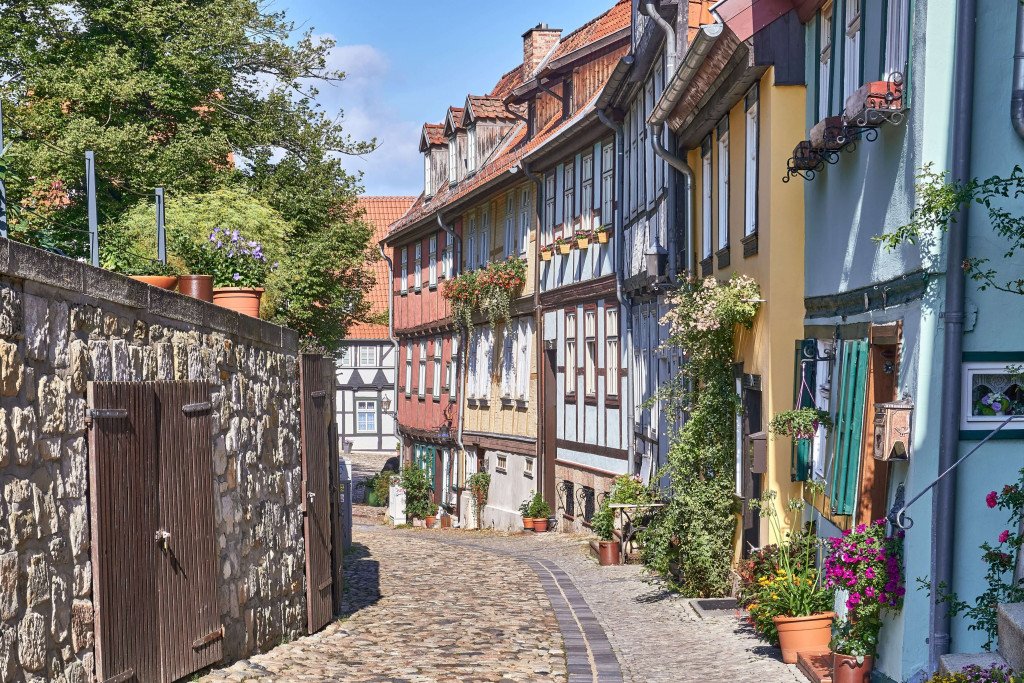
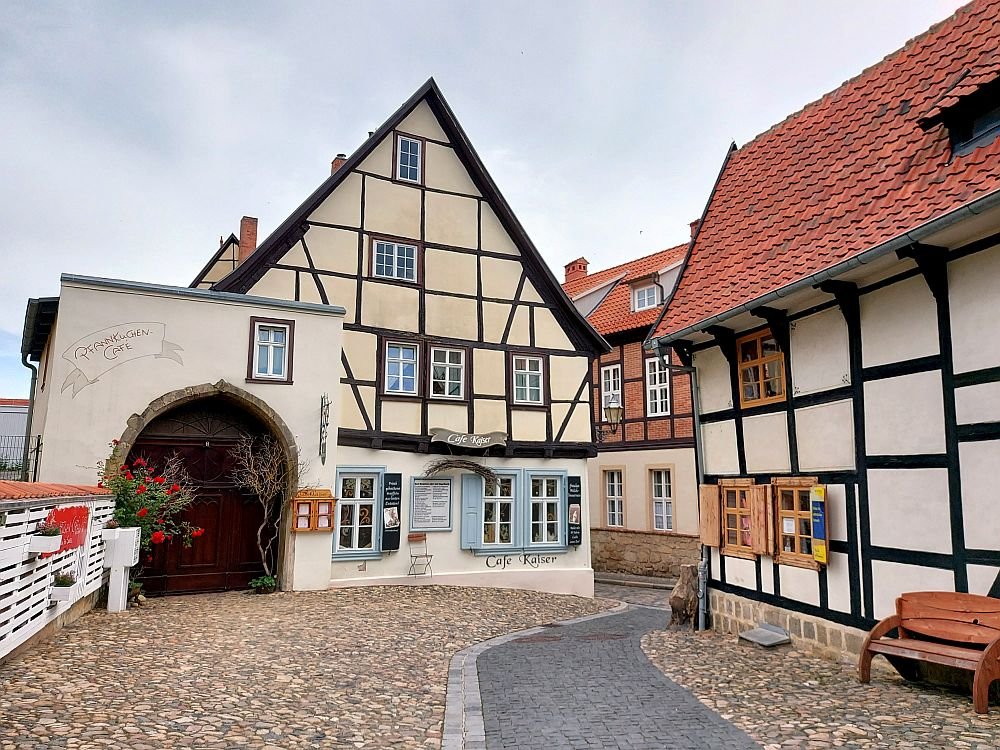
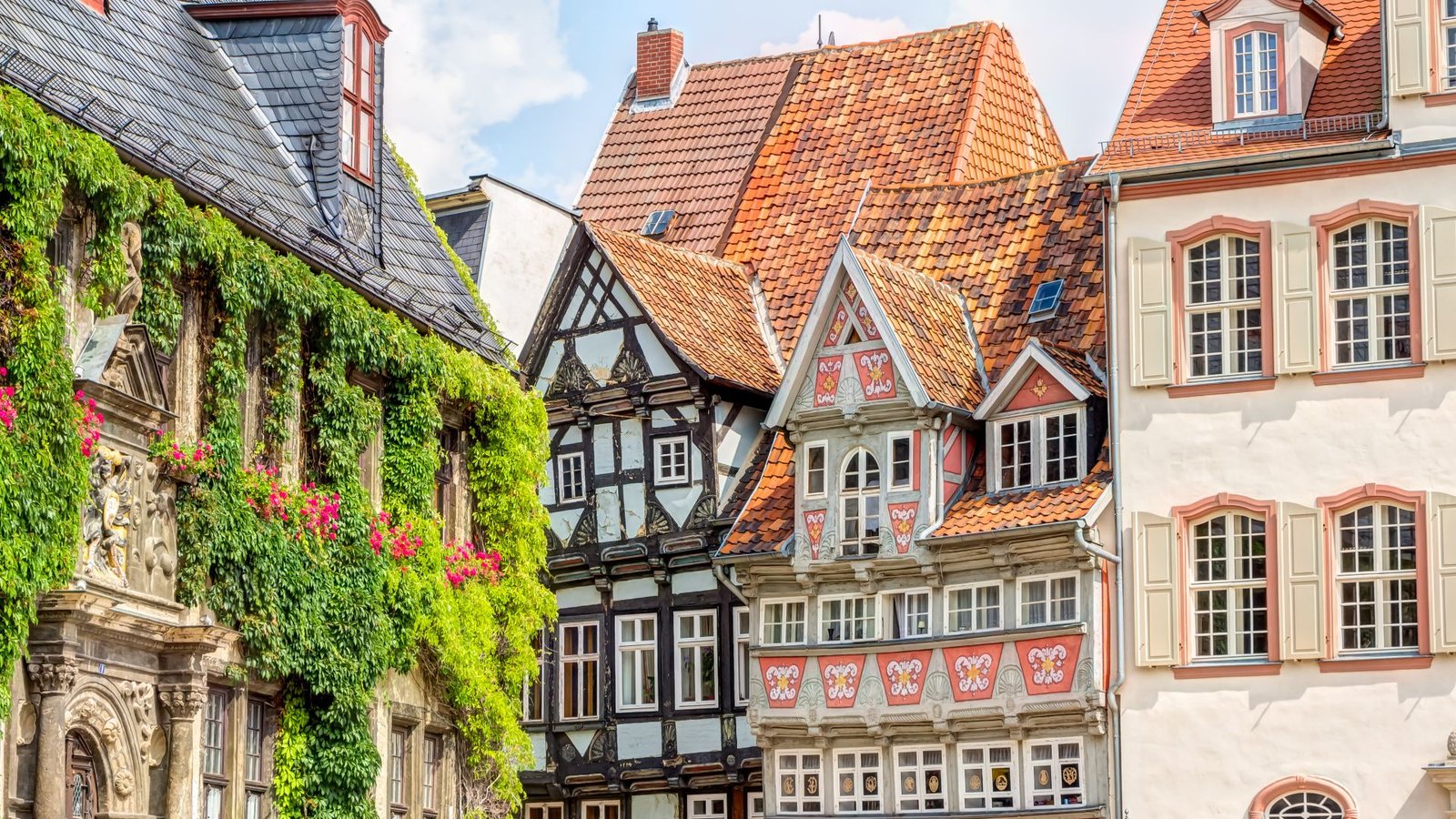
No discussion of half-timbered houses is complete without their most celebrated settings. Quedlinburg, in Saxony-Anhalt, reigns supreme as the “half-timber champion.” A UNESCO World Heritage Site since 1994, its old town preserves over 1,300 to 2,000 medieval-to-19th-century examples crammed into a compact hillside layout. Cobbled lanes like the Finkenherd square buzz with cafes amid leaning gables, while the castle hill offers panoramic views. Quedlinburg’s ensemble survived largely intact, earning it the title of Germany’s largest cohesive Fachwerk collection.
Celle, in Lower Saxony, dazzles with over 500 meticulously restored houses along its old town streets. Known for its “pearl necklace” of facades, the town features the ornate Hoppener Haus (1532), adorned with mythical creatures. Passages through courtyards recall its farming heritage, and the nearby Renaissance castle complements the timbered charm. Celle’s uniformity creates one of Europe’s most harmonious half-timbered townscapes.
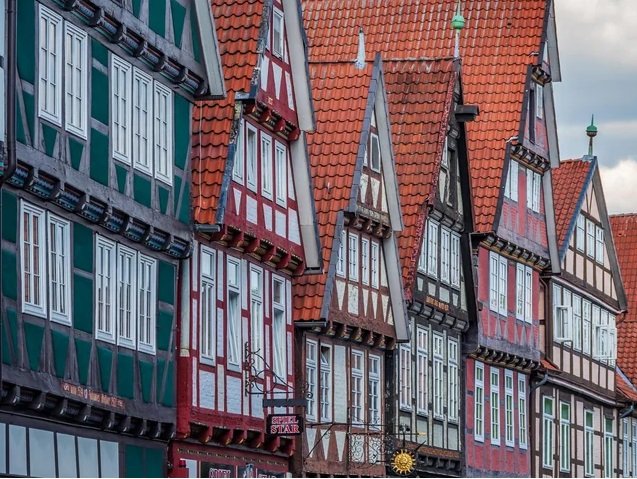
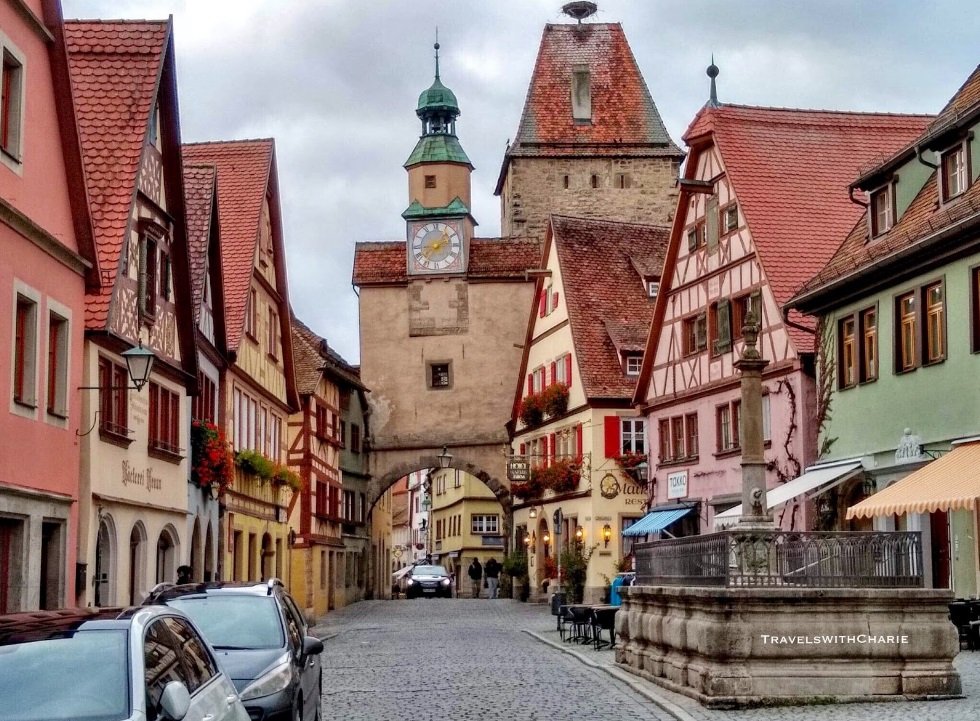
Rothenburg ob der Tauber, on the Romantic Road, embodies fairy-tale perfection. Its medieval walls enclose streets lined with pastel Fachwerk homes, the Plönlein square offering postcard views of towers and gables. Though not exclusively half-timbered, its integration with fortifications makes it a tourist magnet and symbol of preserved German romanticism.
Other gems include Goslar (UNESCO-listed with 1,500 examples amid Harz mining history), Monschau’s narrow alleys, Alsfeld’s crooked Weinhaus, and Tübingen’s student-filled lanes with 800-year-old structures. The German Half-Timbered Houses Route links them all, turning a drive through history into an immersive experience.
Beyond architecture, half-timbered houses are cultural icons. They inspired the Brothers Grimm, whose tales unfolded in such settings, cementing Germany’s image as a land of enchanted forests and gingerbread cottages. Romantic painters like Caspar David Friedrich romanticized them, while 19th-century nationalists viewed them as pure Deutschtum—untainted by foreign styles. Post-WWII, they became beacons of reconstruction, symbolizing hope and heritage amid rubble.
Tourism thrives on their allure: the Fairy Tale Route links half-timbered spots to Grimm landmarks. In neighborhoods, they house museums, shops, and homes, fostering community identity. Their “fairy-tale” aesthetic—crooked yet sturdy—mirrors German resilience, from medieval plagues to modern challenges.
Industrialization, wars, and urban renewal once threatened Fachwerk districts. Fires, neglect, and 20th-century demolitions reduced numbers, but stringent heritage laws and EU funding have reversed declines. Restoration involves specialist carpenters using traditional methods, often with modern reinforcements. Contemporary architects adapt the style for eco-homes, blending timber frames with sustainable infills. Challenges remain: high maintenance costs and climate change-induced decay. Yet initiatives like the Half-Timbered House Route promote awareness, ensuring these symbols endure for future generations.
Half-timbered houses are more than relics; they are the beating heart of Germany’s historical neighborhoods. From medieval ingenuity to modern inspiration, they encapsulate a nation’s story in timber and plaster. As symbols of craftsmanship and continuity, they invite us to cherish the past while building thoughtfully for tomorrow. In every leaning gable and sunlit beam lies a reminder: true heritage is not frozen in time but lived, preserved, and celebrated.