 11
11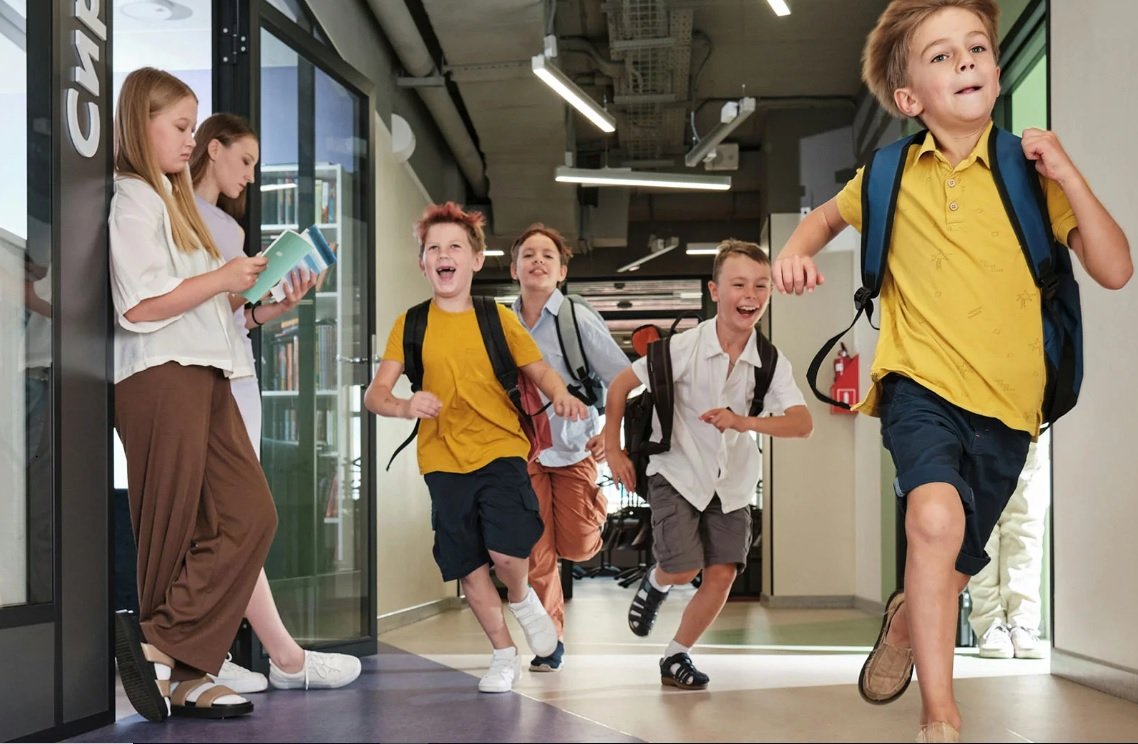
Germany’s public education system is a global benchmark for quality, accessibility, and practical outcomes. Unlike many centralized models, it is decentralized across 16 federal states (Länder), yet unified by national standards coordinated through the Standing Conference of Ministers of Education and Cultural Affairs (KMK). Public schools are tuition-free, attended by over 90% of students, and emphasize Bildung—a holistic concept of personal, intellectual, and civic formation rather than mere job training. Compulsory schooling runs from age six to at least 15 (nine years full-time), with vocational obligations often extending to 18. This article offers a comprehensive, first-hand exploration of what it is truly like to study in a German public school, drawing on structural realities, student and teacher perspectives, pedagogical approaches, and contemporary challenges as of 2025-2026. From the playful yet formative Grundschule years to the high-stakes Abitur or the celebrated dual vocational system, German public education shapes disciplined, skilled citizens while grappling with equity issues in an increasingly diverse society.
✅ Also Read: Unlock Germany’s Academic Excellence: DAAD Scholarships for English-Speaking Students
Education in Germany begins informally but intentionally. Kindergarten (ages 3-6) is optional yet nearly universal, with enrollment rates exceeding 95% for 3-5-year-olds. It is not a pre-academic boot camp; instead, it prioritizes play, social-emotional development, independence, and motor skills. Children learn through structured free play, group activities, nature outings, and basic language exposure. Subsidies make it affordable, and many states have moved toward free or low-cost access to reduce early inequalities. Teachers—often highly trained Erzieher—focus on fostering curiosity rather than drilling letters or numbers. For immigrant families, this phase doubles as crucial German-language immersion.
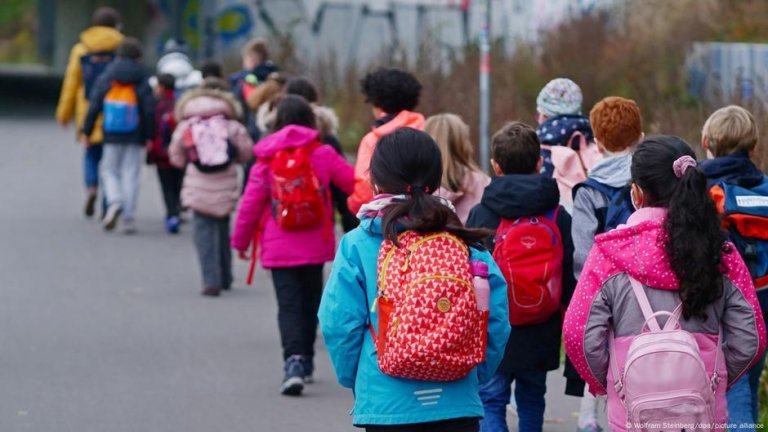
At age six, compulsory education begins with Grundschule (primary school). In most states, this lasts four years (grades 1-4, ages 6-10); Berlin and Brandenburg extend it to six years (ages 6-12) to delay tracking. Classrooms are mixed-ability, promoting inclusivity and collaboration. The curriculum covers German, mathematics, Sachkunde (integrated science, history, geography), a first foreign language (usually English from grade 3), art, music, sports, and ethics or religion (with opt-outs). Lessons are interactive: project-based learning, hands-on experiments, and circle-time discussions dominate. No school uniforms exist, and the atmosphere feels relaxed yet orderly—students address teachers formally (Sie) but build warm relationships.
A typical Grundschule day starts between 7:30 and 8:15 a.m. and ends by 1 p.m. or earlier. Each lesson is 45 minutes, punctuated by 5-10 minute breaks and a longer mid-morning recess for outdoor play or snacks. Homework is minimal in early grades, emphasizing reading and simple practice over rote memorization. Grading begins formally in grade 2 on a six-point scale (1 = sehr gut/excellent; 6 = ungenügend/insufficient; 4 is the lowest passing grade). First-graders often receive narrative reports instead of numbers to ease pressure. Teachers observe closely and involve parents through regular conferences.
This phase builds foundational skills and character. Children learn punctuality, responsibility (they carry their own heavy Schulranzen backpacks—no universal lockers), and social norms. For expat or migrant children, Willkommensklassen (welcome classes) provide language support before full integration. One Reddit user who arrived as the only foreigner in a rural Bavarian primary school recalled initial isolation but eventual acceptance through shared play and sports clubs.
The end of Grundschule marks a defining moment. Around age 10 (or 12 in two states), teachers issue a binding recommendation for secondary tracks based on academic performance, classroom observations, and parental input. Parents can often override it, but the choice is weighty. Students proceed to Gymnasium, Realschule, Hauptschule, or comprehensive Gesamtschule. This early tracking—earlier than in most OECD countries—aims to tailor education to abilities, reducing frustration and optimizing resources. Proponents argue it allows gifted students to advance quickly and vocational learners to thrive without academic overload. Critics, however, highlight how it entrenches socioeconomic and migrant disadvantages: working-class and immigrant-background children are overrepresented in lower tracks despite comparable potential. PISA data consistently show strong correlations between socioeconomic status and track placement.
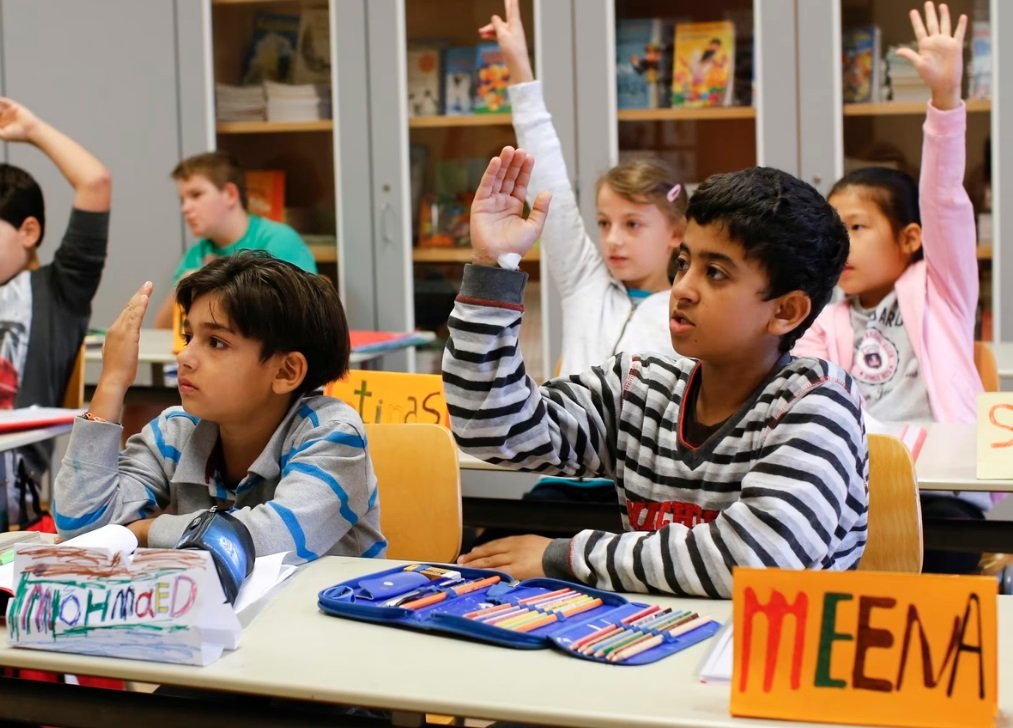
Reforms have increased permeability: students can switch tracks later with good grades, and many states have merged Hauptschule and Realschule into combined middle schools. Yet the debate rages. In 2025 OECD reports, Germany’s between-school variation in performance remains high, partly due to tracking.
Gymnasium: The academic track, attended by roughly 37% of students nationally. It runs from grade 5 to 12 or 13 (depending on state G8/G9 reforms) and culminates in the Abitur—a rigorous university-entrance qualification. Curriculum is demanding: advanced languages (at least two foreign, often English plus French, Latin, or Spanish), mathematics, sciences, history, and electives. Students specialize in Leistungskurse (advanced courses) in upper grades. Classes emphasize critical analysis, essays, oral presentations, and independent research. The pace is intense; students report long study hours but also deep satisfaction in mastering complex material. Transfer upward is possible but competitive. Gymnasium graduates dominate university pathways and fields like engineering and medicine.
Realschule: The most popular choice (around 17-40% depending on state and data), lasting until grade 10 and awarding the Mittlere Reife (intermediate certificate). It balances academics and practical skills, with strong emphasis on languages, math, sciences, and applied subjects like economics or technology. Ideal for mid-level careers in business, IT, or administration, it prepares students for apprenticeships or further vocational schools. Many describe it as “solid all-rounders”—challenging yet manageable, with room for hands-on projects. High performers can bridge to Gymnasium.
Hauptschule: Focused on basic education and vocational readiness, typically ending after grade 9 with the Hauptschulabschluss. Pace is slower, incorporating more practical training and career orientation. Though sometimes stigmatized as the “lowest” track, modern reforms integrate it with Realschule options and emphasize employability. Graduates move seamlessly into apprenticeships.
Gesamtschule and others: Comprehensive schools combine tracks under one roof, delaying or minimizing separation. They promote social integration but vary in quality and resources by state. Special-needs inclusion (Inklusion) is expanding, moving more students into mainstream settings.
German secondary school days are structured and efficient. Classes begin early—7:30 to 8:15 a.m.—with 45-minute periods and short breaks. A typical morning includes five to six lessons, a 20-minute big break for fresh air and snacks, and core subjects in the first half of the day. Many traditional schools finish by 1-2 p.m., allowing afternoons for homework, sports Vereine (clubs), or family time. However, Ganztagsschulen (full-day schools) are growing rapidly due to dual-income households; these extend to 3-4 p.m. with lunch, supervised study, and electives.
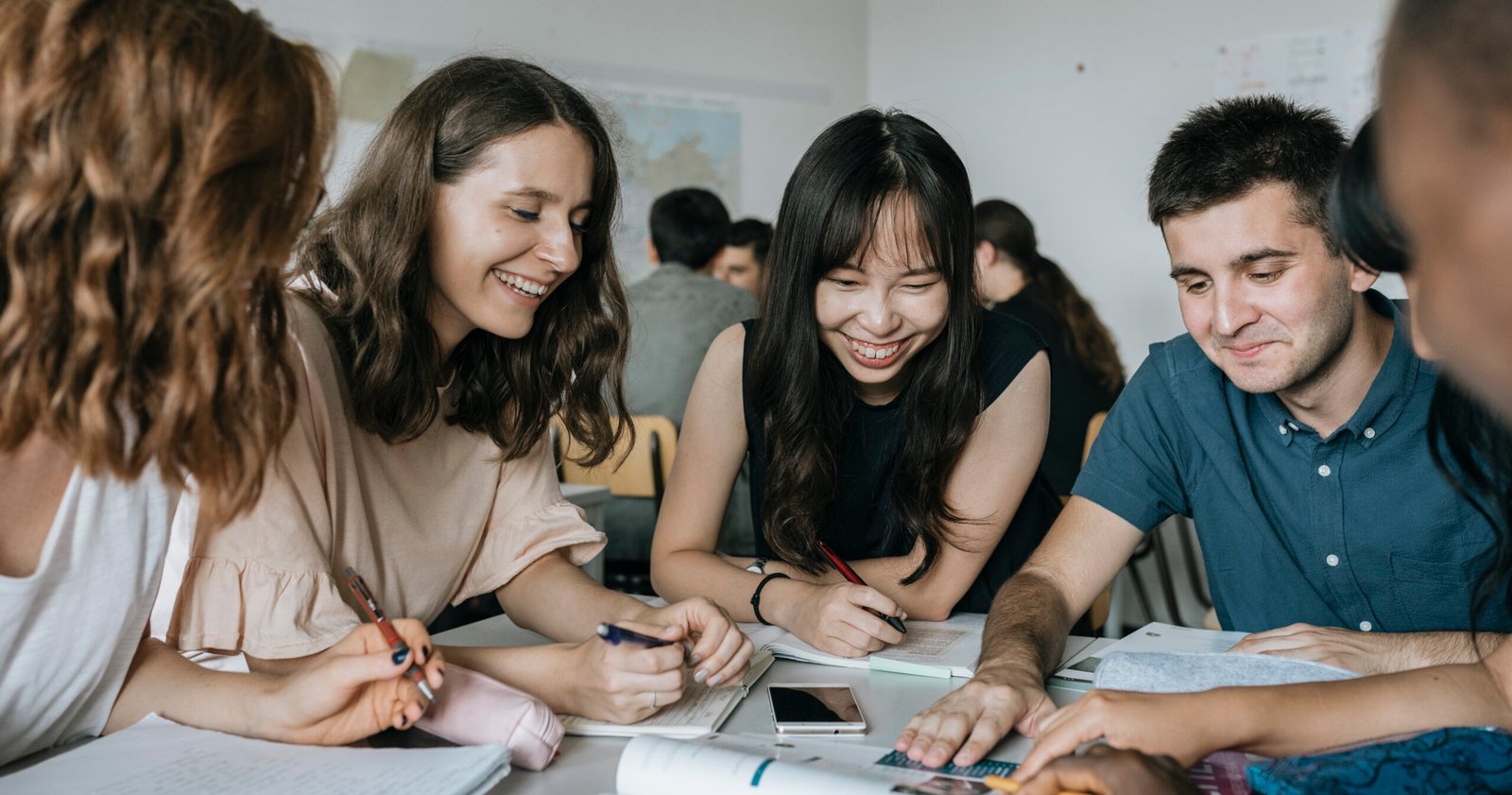
Students move between subject-specific rooms (no homerooms after primary), carrying backpacks filled with textbooks. No bells in some schools—students self-regulate transitions. Discipline is respectful but firm: tardiness or disruption is rare, and teachers command natural authority. Bullying is addressed proactively through school councils and anti-harassment programs. Lunch is not universally provided (many still go home), but cafeterias are standard in full-day models. Public transport passes are subsidized; bikes and walking are common.
Extracurriculars thrive outside school via community clubs: soccer, music, theater, or environmental groups. Holidays total about 75 days, including a six-week staggered summer break to prevent overcrowding. Religious or ethics classes foster values; digital literacy and sustainability are now core.
German pedagogy values depth over breadth. Teachers—university-trained with rigorous practical phases—are well-respected professionals, though shortages persist in STEM and certain regions. Classrooms blend traditional methods (chalkboards, lectures) with modern tools (smartboards, group work). Emphasis lies on critical thinking, precision, and real-world application. Curriculum follows state guidelines aligned nationally, covering broad Bildung plus contemporary themes like climate change and media literacy.
Grading is strict and transparent: the 1-6 scale rewards mastery. In Gymnasium upper years, a 15-0 point system refines Abitur averages. Oral participation, projects, and written exams count heavily. Grade repetition is possible but uncommon after reforms. Feedback is direct; parents receive detailed reports twice yearly.
Real stories illuminate the system. A former Gymnasium student in North Rhine-Westphalia described “rigorous but fair” pressure: “We had to read Kant in philosophy and solve differential equations, but it prepared me perfectly for university.” Realschule alumni often praise balance: “I learned languages and practical tech skills without burnout.” Hauptschule graduates highlight vocational confidence: “We built actual projects and entered apprenticeships debt-free.”
Expat and migrant perspectives add nuance. One American child integrated into a Berlin Grundschule noted language immersion’s steep curve but rapid progress via welcome classes. A Reddit expat recalled village primary challenges as the sole foreigner yet ultimate belonging through sports. International teens in Gymnasium appreciate academic rigor but miss American-style extracurriculars. Common threads: independence (navigating transport, managing time), respect for authority, and strong peer bonds formed in clubs.
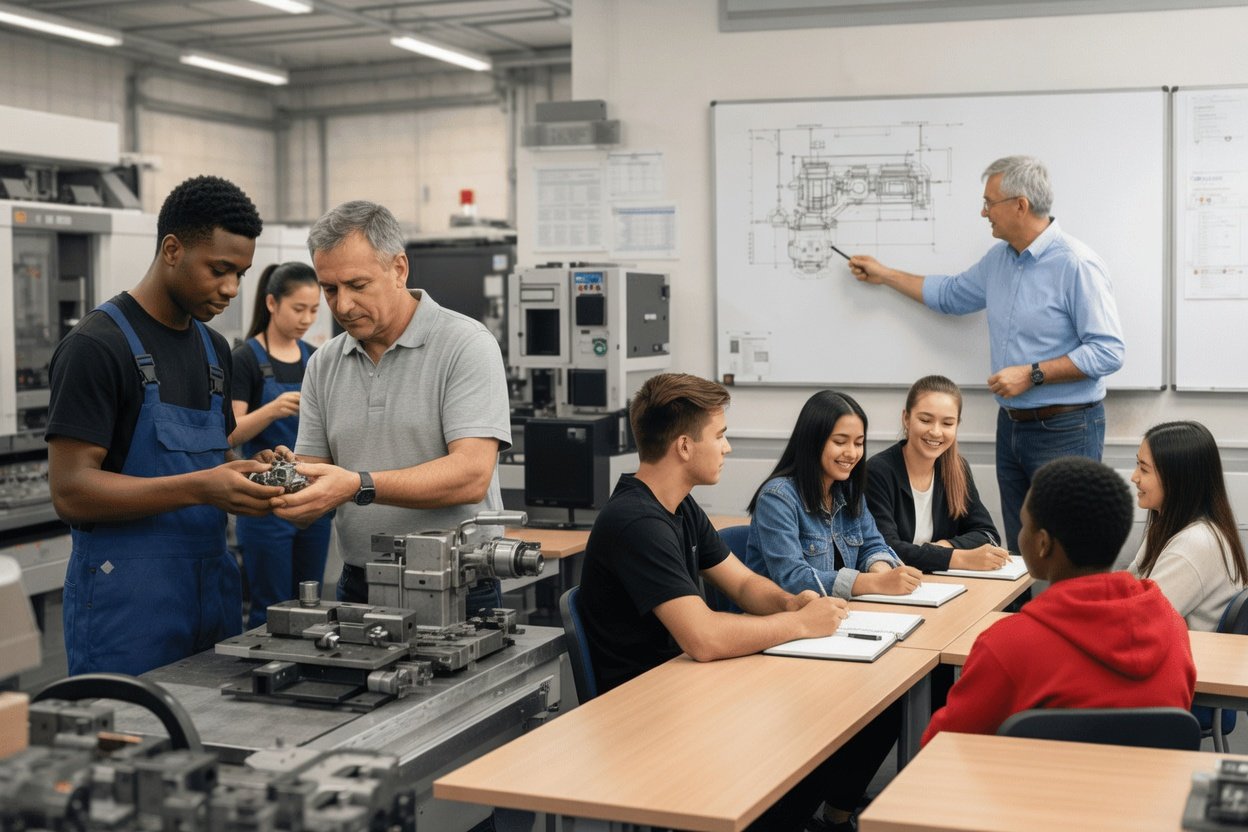
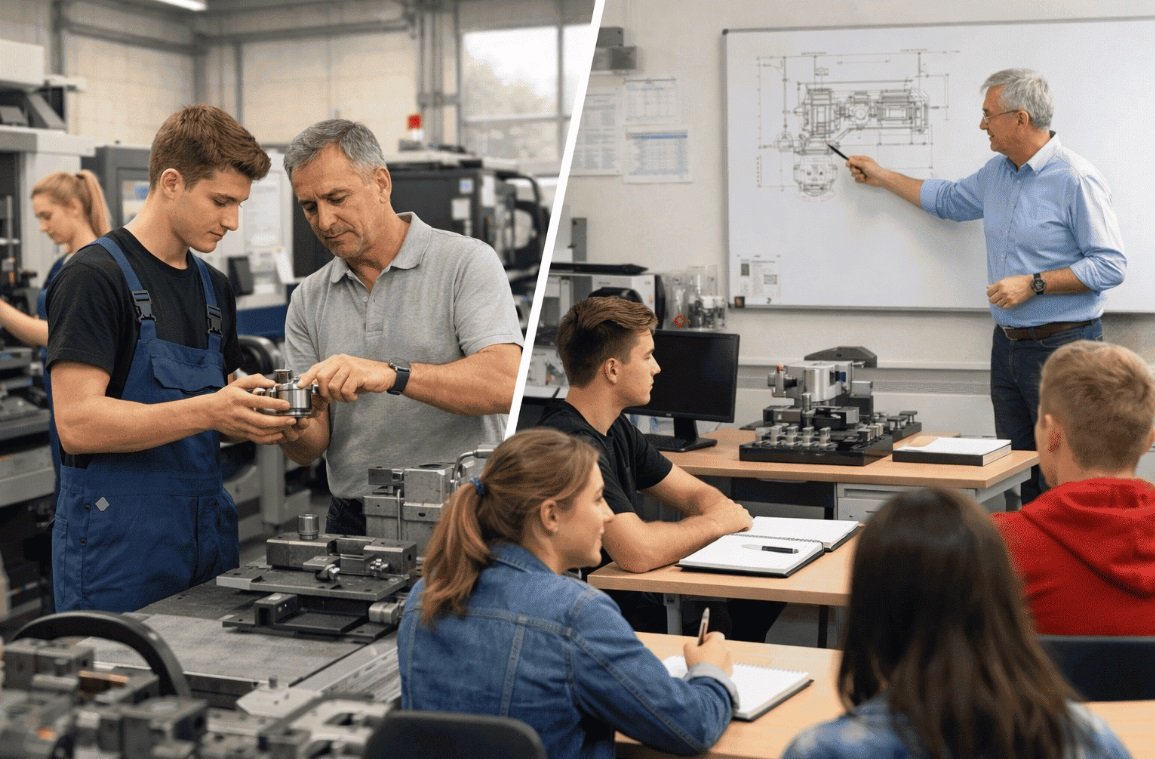
Germany’s crown jewel is the dual vocational training system. After secondary school, roughly half of students enter paid apprenticeships combining company work (3-4 days/week) and Berufsschule (1-2 days). Over 300 recognized professions—from mechatronics to nursing—offer structured pathways. Trainees earn stipends (rising yearly), gain certifications, and often secure permanent jobs. Youth unemployment hovers near 6%, far below EU averages. Companies invest heavily because the system delivers ready-to-work talent. International recognition is high; many countries seek to emulate it.
Despite strengths, the system faces scrutiny. Early tracking correlates with persistent gaps: PISA 2022 showed socioeconomic status explaining 17% of performance variance (above OECD average). Migrant-background students (now over 22% of cohorts) lag, especially first-generation arrivals, with underachievement rates in math reaching 64% for foreign-born youth. Early school leaving rose to 12.9% in 2024, highest among boys and migrants. Teacher shortages, post-pandemic learning losses, and digitalization lags compound issues. Inclusion efforts and full-day expansion aim to address this, but progress is uneven across states.
Critics argue tracking perpetuates inequality; supporters note it prevents one-size-fits-all failure. Reforms include later tracking pilots, better language support, and anti-bias training for educators. The 2025 Education at a Glance report highlights both achievements and the need for continued equity focus.
Germany’s public schools produce adaptable, skilled graduates. Free access, high teacher standards, vocational parity, and emphasis on responsibility yield strong STEM and trade outcomes. Students emerge punctual, analytical, and community-oriented. For expats, immersion accelerates language and cultural integration. Compared to debt-heavy U.S. or exam-crazed Asian systems, it balances excellence with practicality.
In conclusion, studying in a German public school is an experience of structure, challenge, and opportunity. From Grundschule laughter to Abitur intensity or apprenticeship wages, it forges resilient individuals ready for a changing world. While equity reforms remain urgent, the system’s adaptability, quality, and proven results explain Germany’s economic and social resilience. For families worldwide considering relocation—or policymakers seeking models—it offers timeless lessons in accessible, effective education that values both the mind and the practical life.