 11
11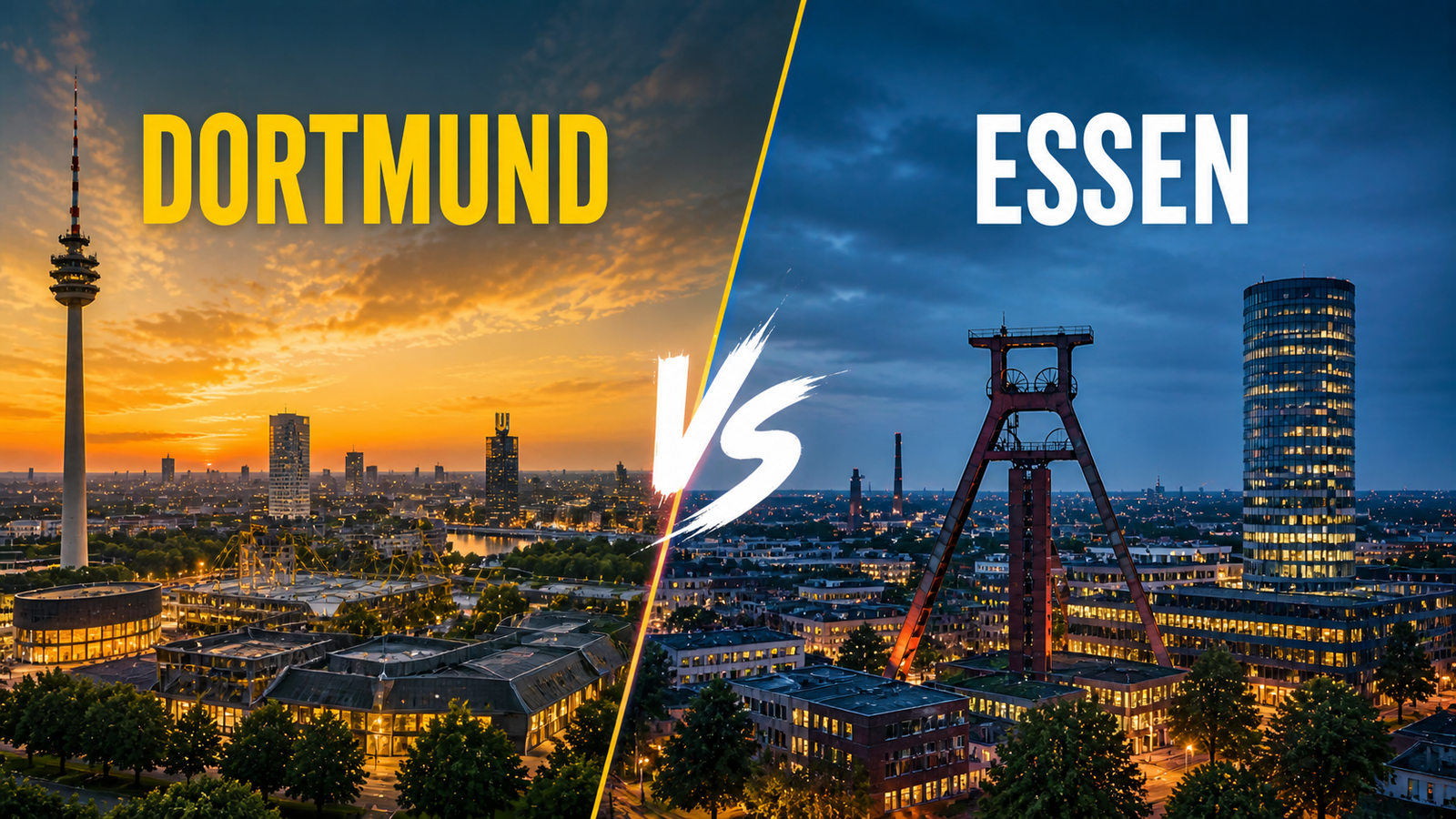
The Ruhrgebiet, often simply called the Ruhr Area or Ruhrpott, represents one of Europe’s most fascinating urban experiments. This polycentric metropolitan region in North Rhine-Westphalia, Germany, stretches across more than 4,400 square kilometers and is home to over 5 million inhabitants. Once the industrial engine of Europe, fueled by coal, steel, and unyielding labor, it has transformed into a vibrant laboratory of structural change (Strukturwandel), green innovation, and cultural rebirth. At its eastern and central heart stand two powerhouse cities: Dortmund and Essen. Dortmund, the largest city in the Ruhr by area and often by population, embodies Westphalian resilience, football passion, and logistical prowess. Essen, historically known as Kruppstadt, carries the weight of Germany’s heavy industry legacy while pioneering service-oriented and cultural excellence.
This 4,000-word comparative analysis delves deeply into their histories, geographies, economies, cultures, sports scenes, education systems, quality of life, demographic shifts, and future trajectories. Far from mere rivals, Dortmund and Essen function as complementary siblings within the Rhine-Ruhr Metropolitan Region—one of the EU’s economic powerhouses—illustrating how post-industrial cities can reinvent themselves while honoring their roots.
✅ Also Read: Leipzig vs Dresden: Which Saxony City Should You Choose?
Dortmund’s documented history begins around 882 AD as Throtmanni, referenced in records from the nearby Werden Abbey. By the 13th century, it had risen to prominence as a free imperial city (Freie Reichsstadt) and a key member of the Hanseatic League. Its merchants traded extensively across Europe; historical accounts note that the English crown even used Dortmund lenders as security for loans. This mercantile golden age left architectural legacies such as the Reinoldikirche, Marienkirche, and Propsteikirche, which still define the city center.
The Thirty Years’ War (1618–1648) devastated the city, leading to a sharp decline. By the early 19th century, the population had dwindled to roughly 4,000. Industrialization changed everything. Coal mining, steel production, and brewing drove explosive growth in the 19th and early 20th centuries. The completion of the Dortmund-Ems Canal in 1899 linked the city to North Sea ports, amplifying its role as a transport hub. At its industrial peak, Dortmund was a manufacturing colossus. World War II inflicted catastrophic damage—Allied bombing campaigns in 1945 left much of the center in ruins. Post-war reconstruction blended modernist planning with the preservation of historic landmarks, setting the stage for later renewal projects.
Essen’s roots run even deeper, tracing to the mid-9th century (around 845–852) with the founding of a Benedictine convent by Bishop Altfrid. The Essen Abbey (Münsterkirche) served as a powerful ecclesiastical center for noblewomen, providing stability through centuries of political turbulence. Unlike Dortmund’s trade-oriented identity, Essen’s early development was closely tied to its religious institution until secularization in 1802, when it came under Prussian control.
The Krupp family’s rise defined modern Essen. Starting in the early 19th century, Alfred Krupp and his successors built a vast industrial empire centered on steel and armaments. Essen became synonymous with Kruppstadt, growing from a modest settlement to a city of over 700,000 at its mid-20th-century height. Its strategic importance made it a prime target in WWII, resulting in heavy destruction. Post-war, Essen confronted deindustrialization head-on, closing mines and restructuring earlier than many neighbors. The legacy of this singular industrial dynasty remains visible in landmarks like Villa Hügel, the opulent Krupp family residence.
Core Historical Divergence: Dortmund balanced commerce, brewing, and diversified industry with a tradition of civic autonomy. Essen was more monolithic, shaped by one powerful family and ecclesiastical foundations. Both endured the same cycles of boom, wartime ruin, and painful transition, yet their distinct origins continue to flavor their modern identities within the shared Ruhrpott ethos of straightforwardness and hard work.
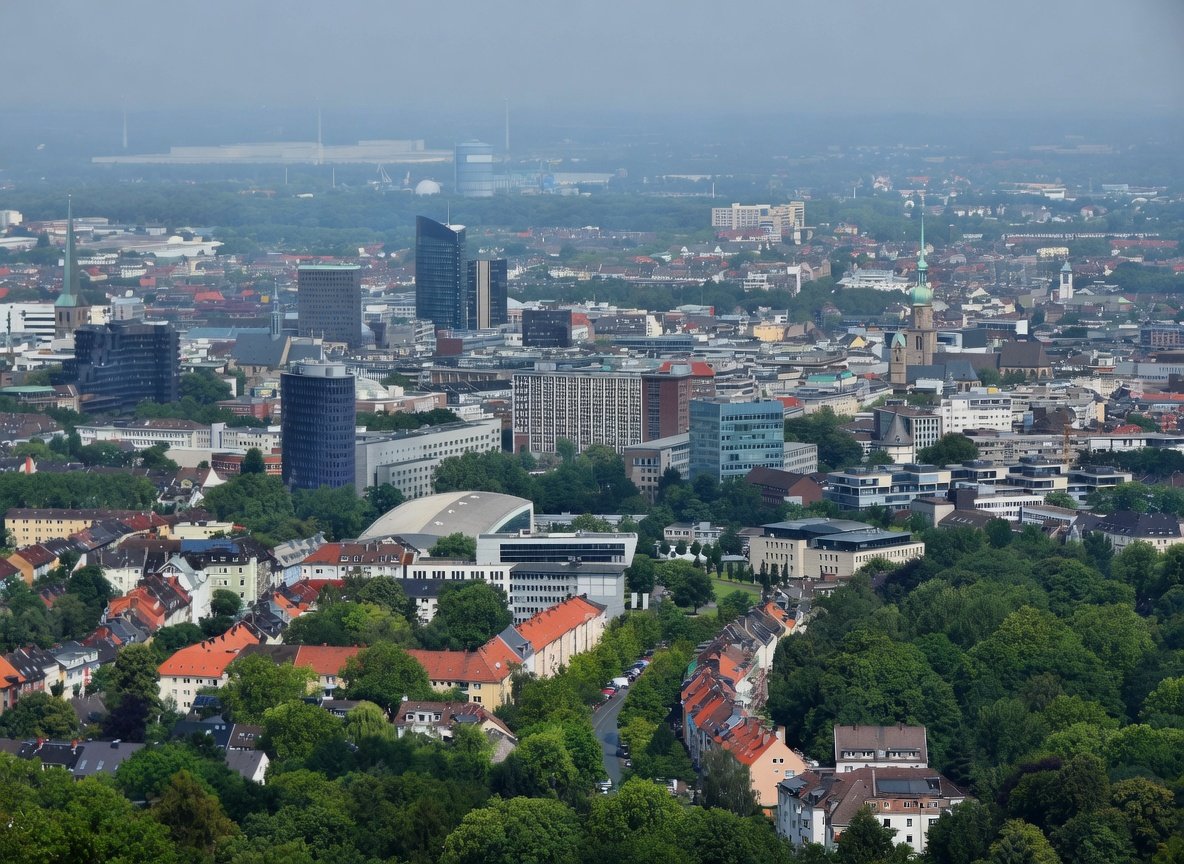
Dortmund spans approximately 280 km², making it the largest city by area in the Ruhr. Recent population figures place it around 590,000–603,000 residents (as of 2024–2025 data). Essen covers about 210 km² with roughly 575,000–588,000 inhabitants. Both cities lie along the Ruhr and Emscher river systems in the seamless Rhine-Ruhr conurbation, which connects them fluidly to Bochum, Duisburg, Düsseldorf, and beyond. This polycentric structure means commuting and regional identity often transcend city limits.
Demographically, both reflect Germany’s post-war migration patterns. Significant communities from Turkey, Poland, Italy, the Balkans, and more recent arrivals from Eastern Europe, the Middle East, and beyond contribute to diversity. Aging populations pose challenges, offset partially by student inflows and immigration. Dortmund tends to feel more sprawling, with nearly half its territory dedicated to green spaces, forests, agriculture, and waterways. Essen presents a denser, more compact urban core, historically oriented toward heavy industry but now emphasizing services and retail.
Cost of living remains broadly comparable, though Dortmund may edge slightly higher in housing in desirable districts. Both grapple with post-industrial inequalities—pockets of higher unemployment and social needs—yet benefit from strong social welfare systems and ongoing regeneration. The Ruhrdeutsch dialect and shared regional pride foster a sense of belonging that transcends municipal boundaries. Recent trends show slight population stabilization or modest growth in both, contrasting earlier decline phases.
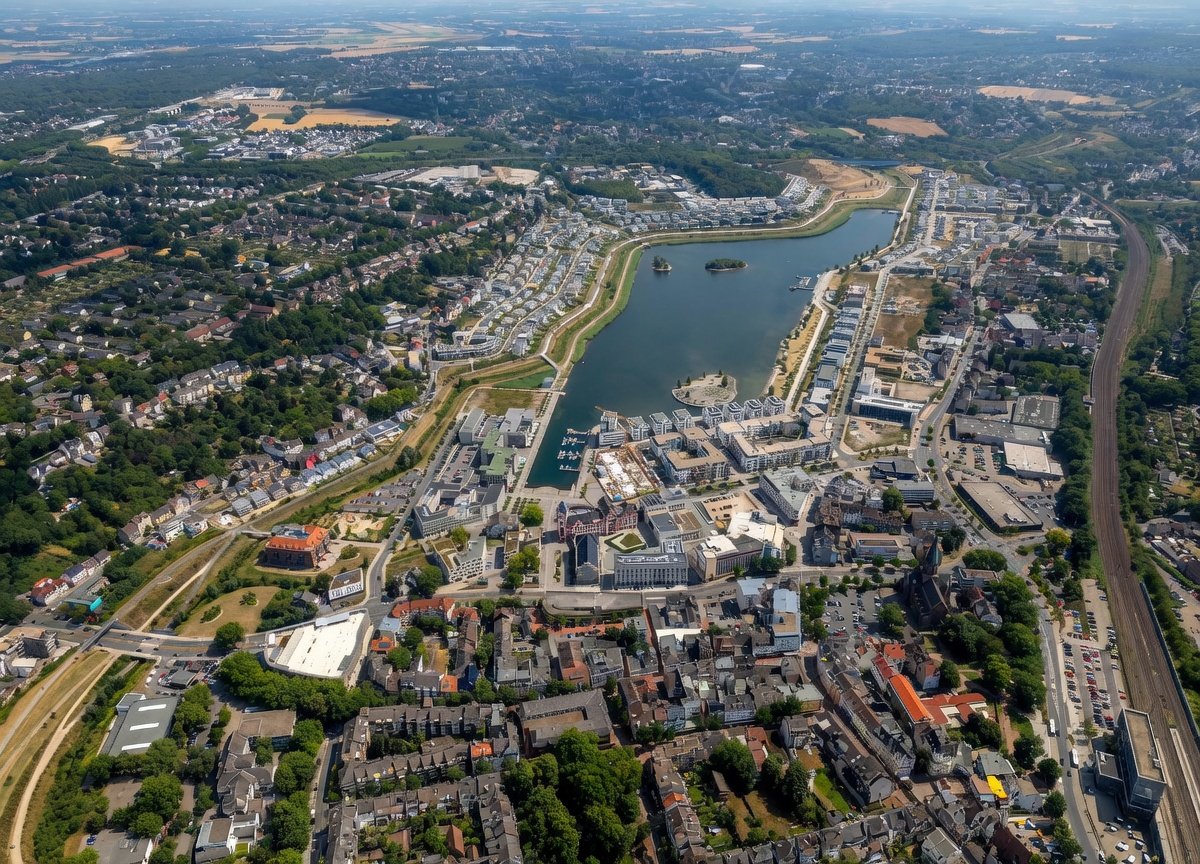
The Ruhr’s structural change is one of Germany’s most studied economic stories. Dortmund once dominated in coal, steel, and beer (it was Europe’s brewing capital mid-20th century). Deindustrialization in the late 20th century caused massive job losses—tens of thousands in traditional sectors. Today, the city pivots aggressively toward logistics (Europe’s largest canal port), IT, robotics, biomedicine, e-commerce, and creative industries. Phoenix Lake and Phoenix West, built on former steel sites, exemplify this rebirth: former industrial wastelands now host modern housing, offices, parks, and tech firms. Dortmund has been recognized for innovation ecosystems and hosts a thriving startup scene supported by universities.
Essen’s economy was even more Krupp-centric. The decline of coal and steel hit hard, but the city leveraged its corporate heritage. Major headquarters like E.ON, RWE, ThyssenKrupp, Evonik, and Hochtief anchor its profile. Services, retail, energy (traditional and renewable), chemicals, and business functions dominate. Essen ranks among the stronger per-capita performers in the Ruhr, with a more pronounced tertiary sector. Its retail offerings are among Germany’s best, drawing regional shoppers.
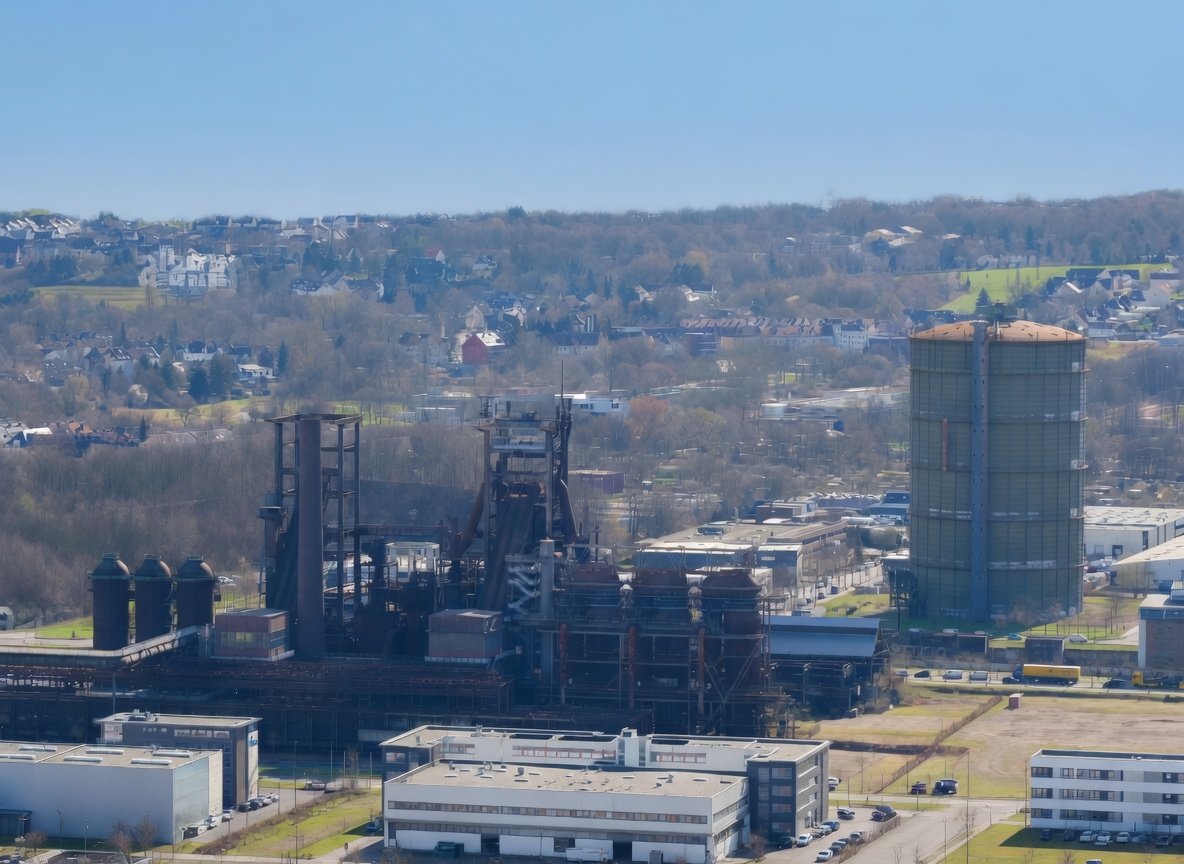
Comparative Strengths: Dortmund excels in logistics, education-linked innovation, and large-scale urban redevelopment. Its inland port and airport enhance connectivity. Essen shines in corporate anchoring, financial services influence, and diversified energy expertise. Unemployment remains a shared challenge, often above national averages, but both cities have created tens of thousands of new service and knowledge jobs. The broader Rhine-Ruhr region contributes substantially to Germany’s GDP, hosting multiple Fortune Global 500 companies.
Sustainability and green tech feature prominently in both. The Ruhr positions itself as a “hydrogen valley,” with investments in clean energy, circular economy, and digitalization. Dortmund’s focus on applied sciences complements Essen’s corporate R&D strengths.
Industrial heritage tourism unites the cities. Dortmund boasts the Zollern Colliery (an Art Nouveau “palace of labor” turned museum), the Dortmunder U (a repurposed brewery tower now a cultural beacon), the German Football Museum, and expansive parks like Westfalenpark and Rombergpark. The city supports theaters, the Konzerthaus Dortmund, opera, and lively festivals. Its blend of accessible culture and green spaces appeals widely.
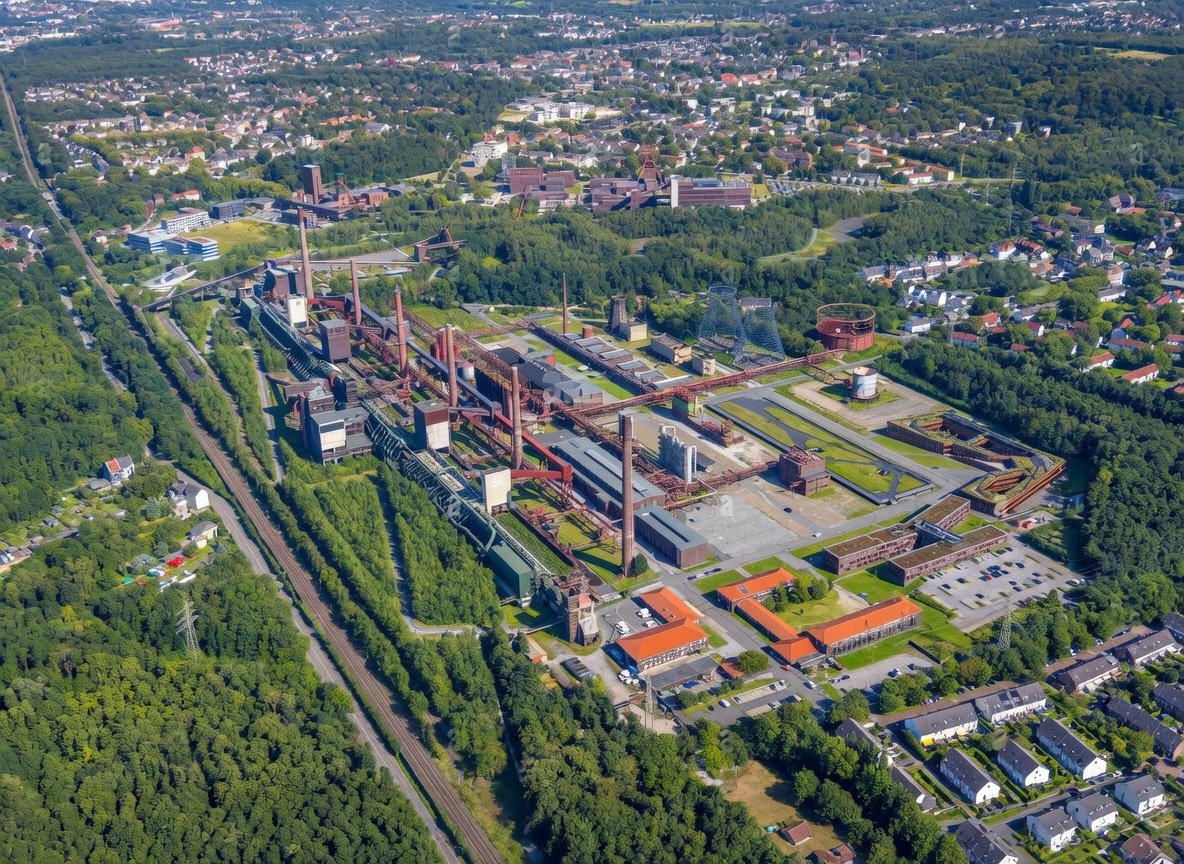
Essen’s crown jewel is the Zollverein Coal Mine Industrial Complex—a UNESCO World Heritage Site since 2001. This masterpiece of Bauhaus-influenced industrial architecture, once one of the world’s most advanced mines, now hosts the Ruhr Museum, Red Dot Design Museum, exhibitions, concerts, and events, attracting 1.5 million visitors annually. Museum Folkwang offers world-class modern art. Villa Hügel provides insight into industrialist grandeur, while Grugapark and Baldeney Lake offer recreation. Essen’s designation as European Capital of Culture (2010) and European Green Capital (2017) elevated its profile.
Cultural Verdict: Essen holds an edge in prestigious institutions and UNESCO status, offering refined, high-culture depth. Dortmund impresses with scale, sports-integrated culture, and community-oriented repurposing. Together, they form pillars of the Route der Industriekultur (Industrial Heritage Trail), turning scars of the past into assets.
Here, Dortmund reigns supreme. Borussia Dortmund (BVB) is a global football institution. The Signal Iduna Park (Westfalenstadion) and its legendary Yellow Wall create one of world football’s most electric atmospheres. Match days inject millions into the local economy through tourism, merchandising, and hospitality. BVB transcends sport, embodying regional pride and social initiatives.
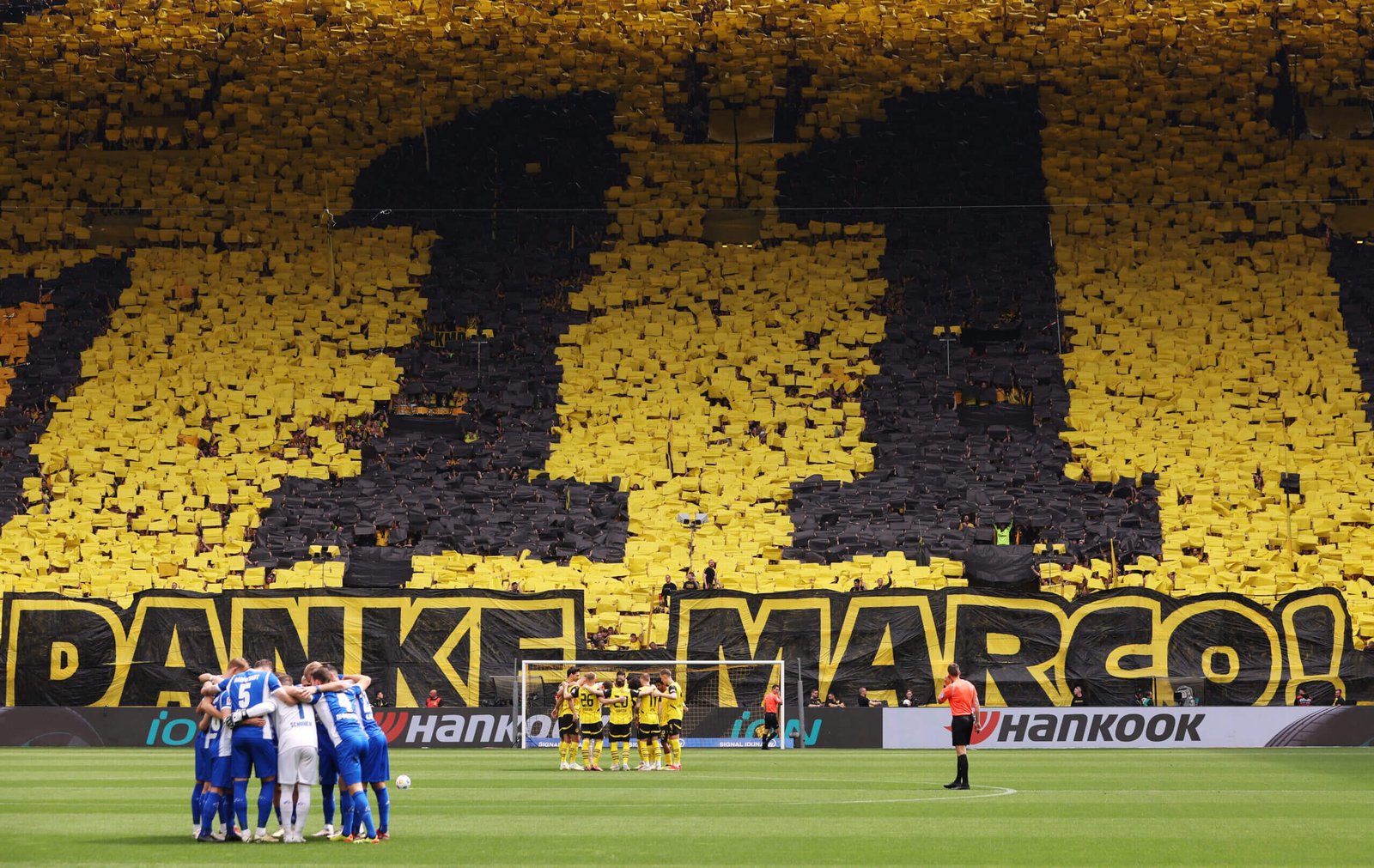
Essen’s Rot-Weiss Essen boasts historic pedigree but operates at lower tiers today. While local sports culture thrives, it lacks BVB’s international magnetism and economic multiplier effect. Football in Dortmund functions almost as a secular religion, boosting city branding far beyond the Ruhr.
Both cities benefit from the Ruhr’s dense university landscape. TU Dortmund University excels in engineering, computer science, data analytics, and logistics. Combined with universities of applied sciences and research institutes, it supports over 50,000 students regionally. Essen shares the University of Duisburg-Essen, a major player driving innovation across disciplines. These institutions fuel startups, corporate partnerships, and the skilled workforce essential for structural change.
Post-industrial Ruhr cities score surprisingly well on livability. Extensive cycling networks on former rail lines (bahntrassenradwege), river renaturalization, and vast parks promote active lifestyles. Dortmund’s larger green footprint contrasts Essen’s urban density and retail vibrancy. Healthcare, public transport (excellent regional integration), and cultural access are strengths. Challenges persist: some neighborhoods lag in regeneration, and air quality legacies remain, though vastly improved.
Safety is generally high by international standards. Expats and newcomers often praise the down-to-earth atmosphere, affordability relative to southern Germany, and proximity to nature (Eifel, Sauerland) and major cities like Cologne and Düsseldorf.
Both cities invest heavily in digital transformation, green technologies, creative industries, and inclusive growth. Dortmund’s innovation ecosystem and logistical advantages position it for e-mobility, supply chain resilience, and tech-driven services. Essen’s corporate base supports stability in energy transition (renewables, hydrogen) and professional services. Demographic diversity brings vitality but requires integration efforts. Regional cooperation within Rhine-Ruhr mitigates competition, fostering synergies.
Climate goals, housing pressures, and skilled labor shortages loom large, yet the Ruhr’s history of adaptation inspires confidence. Projects like the IBA Emscher Park legacy continue influencing urban planning.
Dortmund and Essen are not in zero-sum competition but represent different facets of the Ruhr’s multifaceted identity. Dortmund offers expansive scale, football-fueled passion, logistical muscle, and broad innovation potential. Essen delivers corporate depth, UNESCO-class heritage, refined cultural offerings, and service-sector maturity. Visitors or residents choosing between them might weigh sports and dynamism (Dortmund) against arts, history, and headquarters vibrancy (Essen). Most experience both, as the seamless region encourages fluid movement.
In these cities, the Ruhrgebiet demonstrates that heavy industrial legacies need not doom a region to decline. Through resilience, creativity, public-private partnerships, and European funding, Dortmund and Essen have become living proof of successful urban evolution. The Ruhrpott spirit—pragmatic, welcoming, and forward-looking—endures. Whether drawn by the roar of the Yellow Wall, the architectural poetry of Zollverein, or the quiet satisfaction of a revitalized post-industrial landscape, these cities reward deep exploration. They stand as icons of 21st-century Europe: honoring the past while confidently building sustainable, inclusive futures.