 11
11
Nestled between the rolling hills of the Moselle and the industrial heartlands of western Germany, Saarland stands as one of Europe’s most fascinating cultural hybrids. This smallest of Germany’s non-city-state federal states, with a population of just under a million and a land area comparable to a large metropolitan region, has been a geopolitical football for centuries. Its position astride the Saar River—flowing from France’s Moselle department into Germany—has made it a perennial prize in Franco-German rivalries. Yet out of this contestation has emerged something extraordinary: a vibrant regional culture where French savoir-vivre mingles seamlessly with German Gemütlichkeit, producing what locals affectionately call “Saarvoir vivre.”
The French influence on Saarland is not superficial or recent; it is woven into the fabric of daily life, from the dialect spoken in village pubs to the menus of Michelin-starred restaurants, from school curricula to urban skylines. Unlike Alsace-Lorraine, where French assimilation was more forceful, or Luxembourg with its trilingualism, Saarland’s French imprint feels organic—born of occupation, economic interdependence, and deliberate post-war reconciliation. It is a living testament to how border regions can transcend national binaries, embodying the European ideal long before the European Union existed. This article explores the depth and breadth of that influence, tracing its historical roots, linguistic echoes, culinary innovations, architectural imprints, artistic expressions, and contemporary manifestations. In doing so, it reveals Saarland not merely as a German state with French accents, but as a cultural laboratory where two great European traditions have forged a unique identity.
✅ Also Read: Young Professionals: Top 10 Best Cities in Bavaria for IT Jobs & Tech Careers for Expats
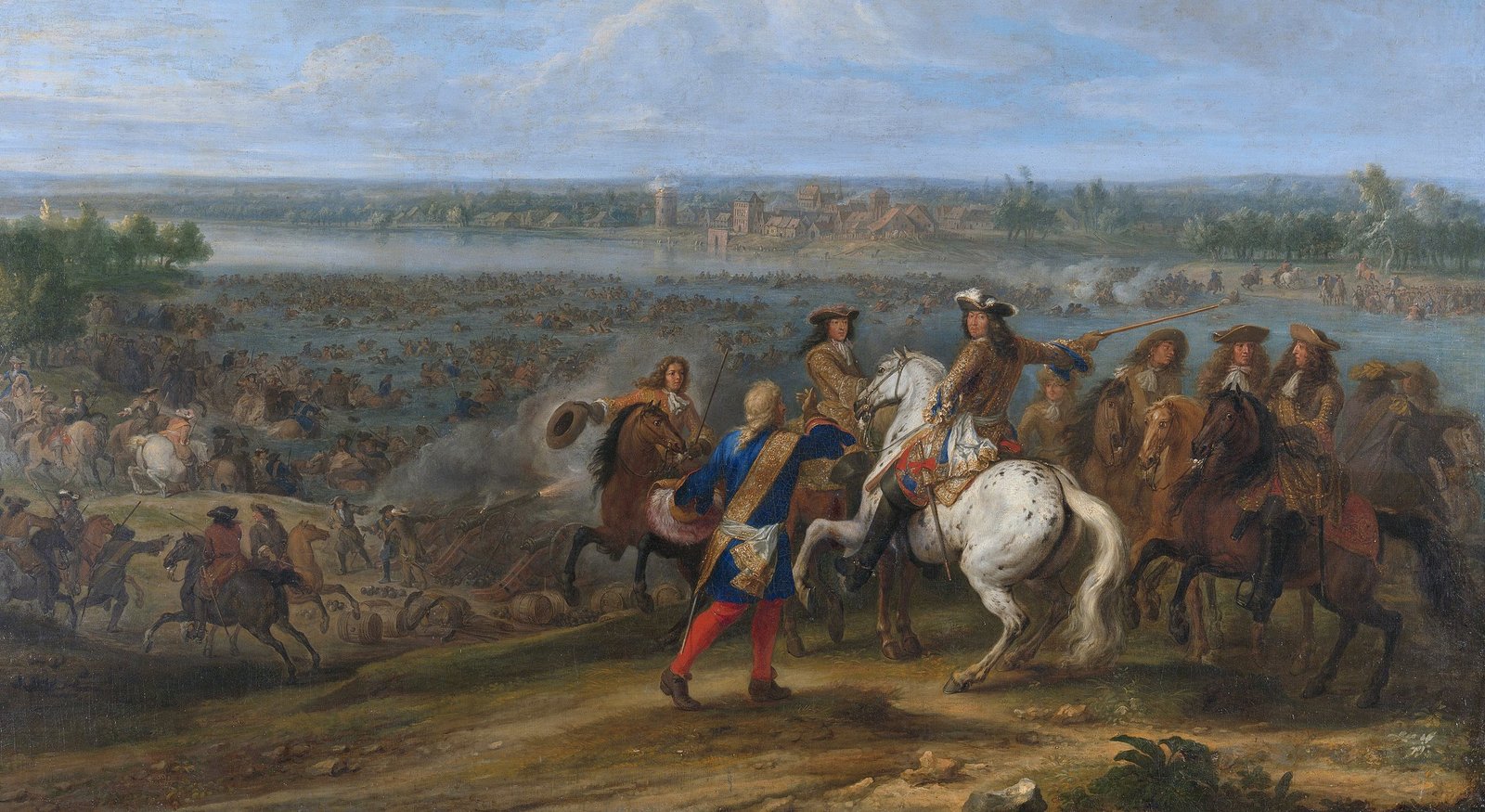
Saarland’s entanglement with France dates back to the 17th century. Following the Peace of Westphalia in 1648, French influence spread eastward as Louis XIV pursued his réunions policy. In 1684, under the Truce of Regensburg, much of the Saar territory became a French province. Though France relinquished most claims in the 1697 Treaty of Rijswijk, retaining only the fortress town of Saarlouis, the cultural seeds were planted. Napoleonic occupation (1792–1815) further entrenched French administrative and legal systems along the Rhine’s west bank, including Saarbrücken. These early encounters introduced French urban planning, taxation models, and Enlightenment ideas to a predominantly German-speaking, Catholic population ruled by the Counts of Nassau-Saarbrücken.
The 20th century amplified this dynamic dramatically. After World War I, the Treaty of Versailles stripped Germany of the Saar Basin’s coal mines, placing the Territory of the Saar Basin (1920–1935) under League of Nations mandate with heavy French administration. French troops occupied key areas, the Saar franc became currency, and French interests controlled the vital coal fields that powered Lorraine’s steel industry. A Governing Commission, often French-dominated, oversaw daily governance despite nominal international oversight. Culturally, this period fostered resentment—evident in the 1935 plebiscite where over 90% voted to rejoin Germany—but also subtle exchanges. French cinema, fashion, and literature filtered across the border, while Saarlanders gained exposure to French republican ideals.
World War II brought even deeper integration. As U.S. forces withdrew in 1945, France established the Saar Protectorate (1947–1957), a semi-autonomous entity economically fused with France. French High Commissioner Gilbert Grandval wielded significant power, overseeing a constitution that emphasized autonomy while tying Saarland’s economy to the franc zone. French banknotes circulated alongside the Saar franc; bilingual decrees appeared; French managers directed mines and steelworks. Culturally, France positioned itself as a “partner and nation of culture,” promoting reconstruction alongside savoir-vivre. Duty-free French goods flooded markets, bookshops stocked French titles, and cultural programs highlighted Gallic refinement. Pro-French parties like the Christian People’s Party (CVP) under Johannes Hoffmann governed, while pro-German groups faced restrictions.
Daily life reflected this duality. Schoolchildren studied French from an early age; French was the language of elite commerce and administration. Yet a 1955 referendum rejected the Saar Statute (67.7% against), paving the way for reintegration into West Germany in 1957. The “small reunification” (Kleine Wiedervereinigung) ended formal separation, but the cultural legacy endured. France’s strategy—rooted in security fears after three wars in 70 years—ultimately succeeded in creating goodwill rather than annexation. Saarland’s return was a cornerstone of Franco-German reconciliation, symbolizing the shift from enmity to partnership that birthed the European Coal and Steel Community.
This history explains why French influence feels embedded rather than imposed. Unlike forced Germanization in Alsace, Saarland’s French elements were negotiated through proximity, economics, and shared trauma. The result: a region that voted German yet retained a Gallic soul.
No aspect of Saarland culture better illustrates French influence than its language. The local dialects—Rhine Franconian in the southeast and Moselle Franconian in the northwest—are unmistakably German, yet peppered with Gallicisms adapted to local phonetics. “Trottwaa” for trottoir (sidewalk), “Fissääl” for ficelle (string or, colloquially, a thin baguette), and the casual greeting “aalleh!” from allez! are everyday utterances. These borrowings arose not from elite imposition but from cross-border trade, occupation-era necessities, and neighborly osmosis. Pronunciation diverges sharply—”Trottwaa” rolls with a Saarland lilt—but the vocabulary endures as living proof of linguistic hybridity.
French holds “special standing” in Saarland. Proximity to the Moselle border ensures many residents converse fluently in French. It is compulsory in schools, a legacy of the 1956 Saar Treaty, which mandated French as the first foreign language (a provision still honored today). Saarbrücken hosts the Deutsch-Französisches Gymnasium, a bilingual secondary school fostering true fluency. In 2014, the state launched its ambitious “France Strategy,” aiming for full bilingualism in German and French by 2043. French joins German as a lingua franca, supplemented by English and others, under the motto “More languages – more opportunities.” The Franco-German University (DFH) maintains its administrative headquarters in Saarbrücken, with programs in European law and computer science drawing on partnerships with Nancy and Metz.
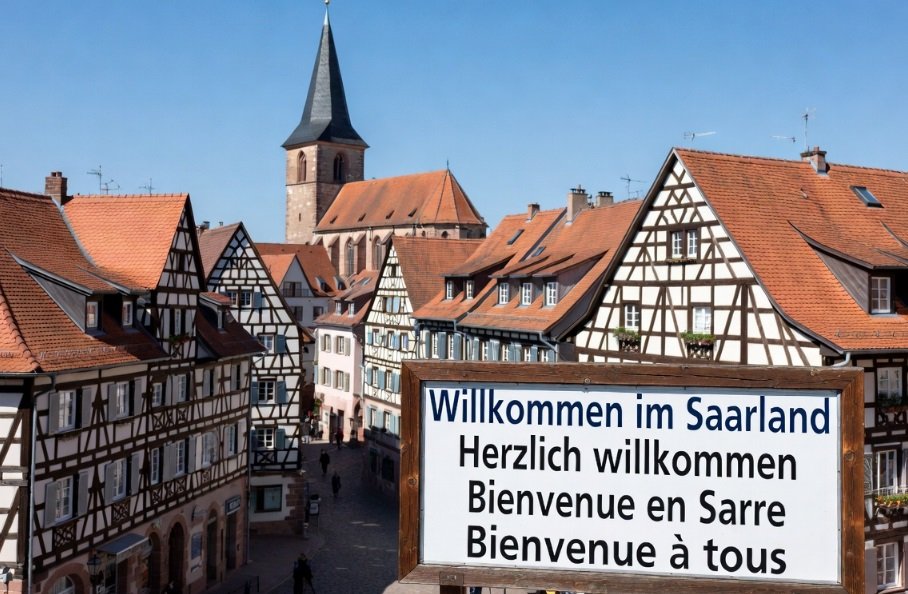
This policy is pragmatic. Saarland’s economy depends on France as its top trading partner; exports of iron, steel, and tools flow westward, while imports include vehicles and foodstuffs. Bilingualism enhances employability in the SaarLorLux euroregion (Saarland-Lorraine-Luxembourg-Wallonia-Rhineland-Palatinate), a cross-border economic powerhouse. Yet it is also identity-affirming. Saarlanders view their dialectal French infusions not as dilution but enrichment—a marker of resilience amid eight nationality shifts in 200 years.
Education reinforces this. The University of Saarland, founded in 1948 with ties to France’s University of Nancy, emphasizes multilingualism. Franco-German programs prepare students for a borderless Europe. Radio Saarland and cultural institutions broadcast in both languages, while theaters stage bilingual productions. The linguistic landscape thus mirrors the region’s history: German at its core, French as a cherished accent.
Saarland’s cuisine epitomizes “Saarvoir vivre”—a playful portmanteau blending savoir-vivre with Saarland earthiness. The phrase captures the region’s philosophy: “Hauptsach’ gudd gess!” (The main thing is to eat well!). Rustic German staples meet French refinement, yielding hearty yet elegant dishes shaped by coal-miner practicality and Gallic flair.
Grilling culture adds social dimension. Schwenken—communal barbecues on swinging tripod grills—transforms meals into festivals of storytelling and Gemütlichkeit, but the marinades and sides often nod to French Provence. Sides like dandelion salad (“Bettseichersalat”) or cabbage-potato medleys balance German robustness with light French acidity.
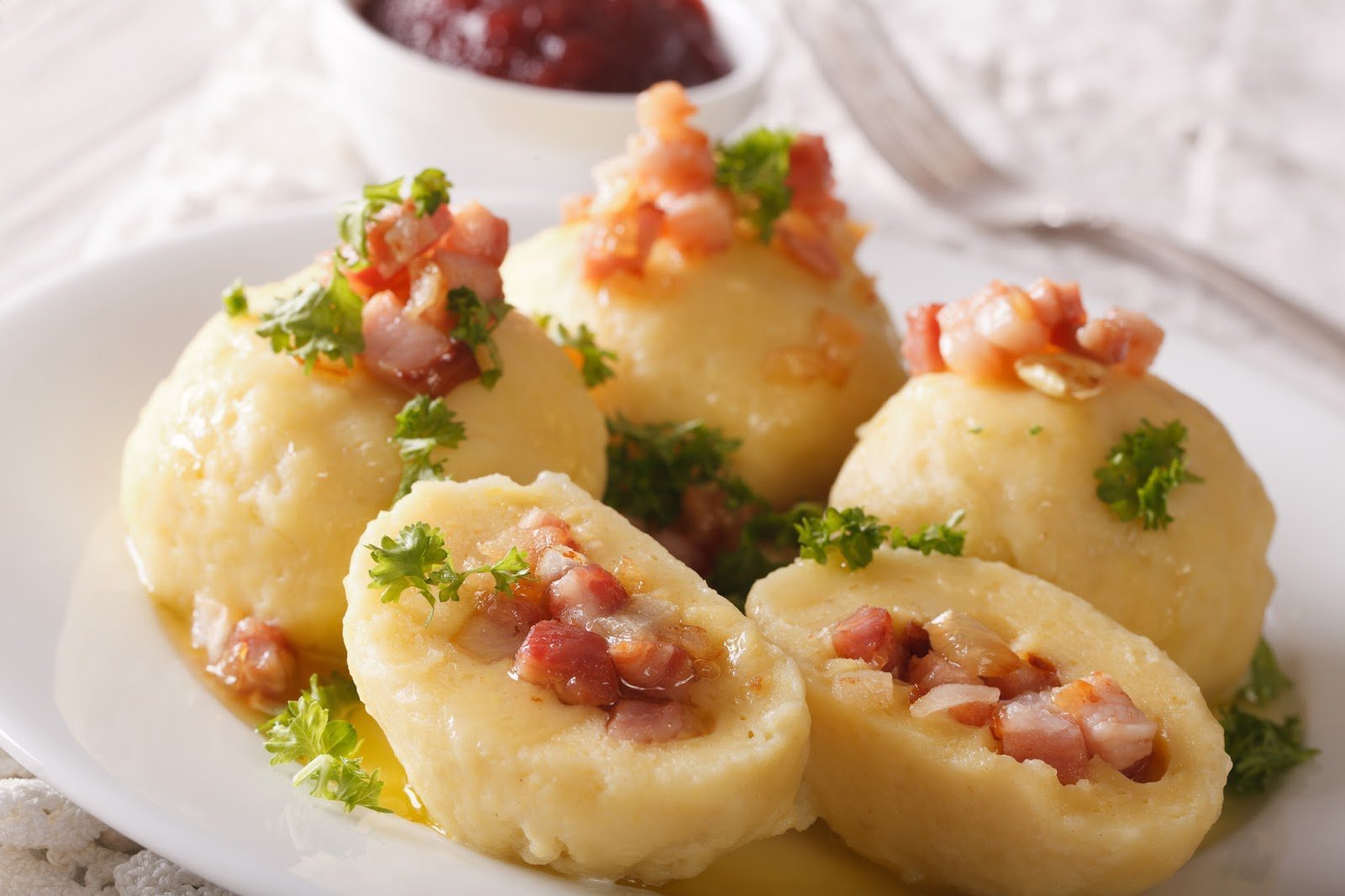
Beverages seal the fusion. Saarland belongs to the Mosel-Saar-Ruwer wine region; steep vineyards yield crisp Rieslings and elegant Pinot Noirs that rival French counterparts. “Viez” (apple wine, akin to French cidre) is a cult favorite, celebrated at Merzig’s Viezfest with spritz variants. Plum schnapps (Quetsch) and premium fruit juices complete the picture. French imports—wines, cheeses, pâtés—have long supplemented local fare, especially during the Protectorate when duty-free goods introduced savoir-vivre to miners’ tables.
This cuisine is more than food; it is cultural diplomacy. Restaurants in Saarbrücken blend haute cuisine techniques with regional produce, earning Michelin recognition. Festivals celebrate the blend, drawing French visitors who shop in Saarbrücken on weekends. In a post-industrial economy shifting to services and tech, “Saarvoir vivre” preserves identity while inviting innovation—proof that French influence nourishes body and soul alike.
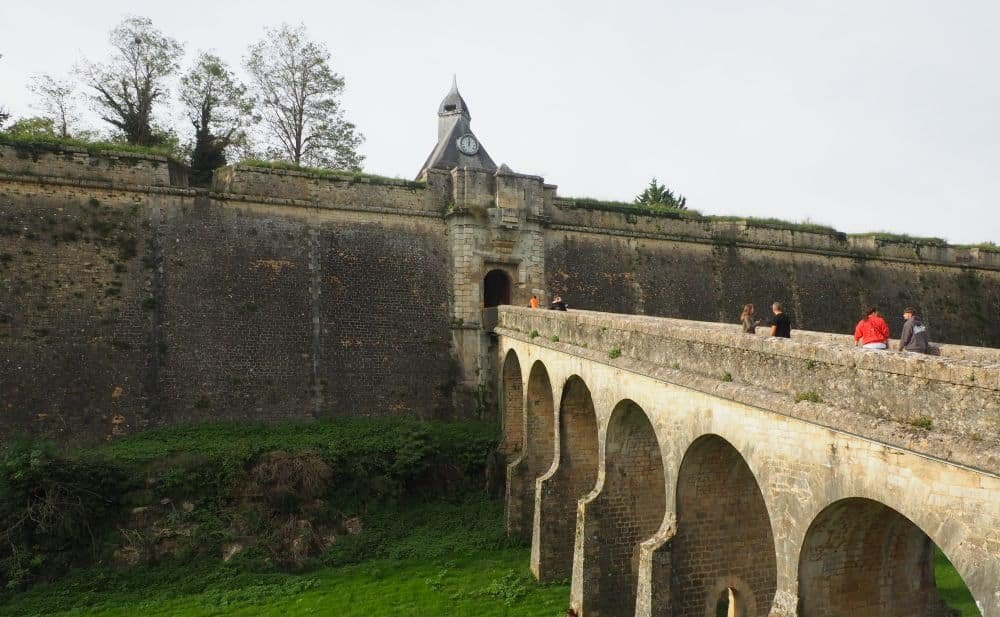
French architectural fingerprints dot Saarland’s landscape most visibly in Saarlouis. Founded in 1680 by Louis XIV and designed by military engineer Sébastien Le Prestre de Vauban, it remains Germany’s “most French city.” Its star-shaped fortifications, though partially dismantled, define the old town’s layout: geometric squares, wide avenues, and cafés evoking Parisian places. The name itself—Saarlouis—honors the Sun King, and remnants of the citadel whisper of 17th-century geopolitics. Baroque churches and administrative buildings from French periods blend with later Prussian and industrial styles, creating a palimpsest of influences.
Saarbrücken, the capital, displays subtler traces. French occupation introduced neoclassical elements and urban planning principles. Post-war reconstruction under French oversight favored functional yet elegant designs, with cultural institutions like the Saarland State Theatre receiving Franco-German funding. The Völklingen Ironworks—UNESCO World Heritage—symbolizes industrial might but sits within a region whose infrastructure (canals, rail) was shaped by French economic needs for Lorraine steel.
Cross-border landmarks, such as castles along the Saar and Rossel rivers, further illustrate shared heritage. Varsberg Castle, granted as a fief from Metz’s diocese, embodies medieval Franco-German ties. Modern architecture in the euroregion continues this dialogue, with joint projects promoting sustainable, bilingual urbanism.
French influence permeates Saarland’s creative sphere. The Saarland State Theatre and Museum draw on both traditions, staging Molière alongside Schiller. Radio Saarland broadcasts French content, while museums highlight shared industrial and artistic history. The University of Saarland fosters intellectual exchange through Franco-German programs, producing scholars in European studies.
Music reflects border fluidity: jazz and chanson influences mingle with German folk and industrial rock. Sports teams once competed independently (Saarland’s 1954 World Cup qualifiers), symbolizing brief cultural autonomy. Contemporary festivals—film, literature, theater—celebrate bilingualism, reinforcing Saarland’s role as a cultural bridge.
Today, Saarland embodies European integration. The SaarLorLux region facilitates daily commuting, shopping, and cultural events. French tourists flock to Saarbrücken; Saarlanders weekend in Metz or Nancy. The 2014 France Strategy and bilingual goals position Saarland as Germany’s multilingual exemplar, a “reference region for living European multilingualism.”
Economically, France remains paramount. Culturally, institutions like the Franco-German University and joint museums sustain ties. Tourism markets Saarland’s “French twist”: baroque squares by morning, woodland hikes by afternoon, fusion dinners by evening. In an era of resurgent nationalism, Saarland models harmony—its French-inflected culture a quiet triumph of reconciliation.
Saarland’s French influence is no relic; it is a dynamic force shaping a forward-looking identity. From Louis XIV’s fortresses to the 1955 referendum, from dialectal loanwords to Michelin plates, France has enriched rather than erased German roots. The result is a resilient, cosmopolitan culture that transcends borders. As Europe grapples with unity, Saarland offers a blueprint: embrace hybridity, invest in bilingualism, celebrate fusion. In this smallest state beats the heart of a greater idea—Europe itself, where savoir-vivre and Gemütlichkeit dance as one.