 11
11
The Germany is widely recognized as one of the world’s strongest industrial economies. But behind its global success lies a powerful and often overlooked driver: its vocational education system.
At a time when many countries struggle with skills shortages and a mismatch between education and jobs, Germany has built a model that directly connects learning with employment. This system ensures that workers are not just educated—they are fully prepared for the demands of modern industry.
✅Germany’s Education System: 10 Reasons That Make It the Best in Europe and the World
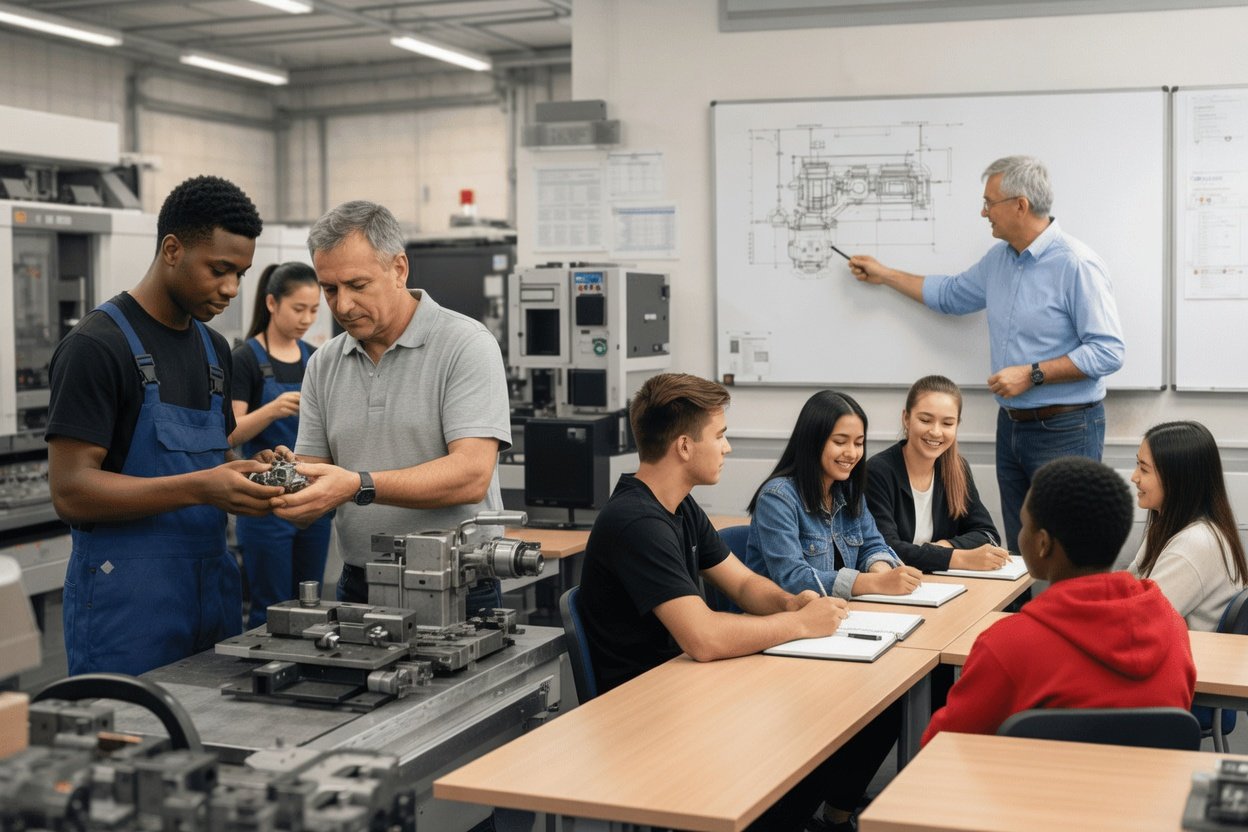
Germany’s success is built on its dual education system, a model that combines classroom instruction with real-world work experience.
Students split their time between:
This approach allows students to gain hands-on experience while still studying, making them job-ready from day one.
This seamless transition from education to employment is one of the biggest reasons behind Germany’s low youth unemployment rate.
Major companies like Siemens, BMW, and Bosch play a direct role in training students.
They help design curricula, provide apprenticeships, and ensure that skills match real market needs.
👉 This means students learn exactly what companies are looking for.
Unlike many countries where graduates struggle to find jobs, Germany achieves:
This is because students already have work experience before they graduate.
In Germany, vocational careers are highly respected.
Becoming a Meister (master craftsman) or technician is seen as:
This removes the stigma often associated with non-university paths in countries like the United States or the United Kingdom.
Germany’s industrial success is closely tied to its workforce.
The country’s famous Mittelstand—small and medium-sized companies—relies heavily on skilled technicians trained through the vocational system.
These companies:
Without a highly skilled technical workforce, this system would not function.
In many English-speaking countries:
In Germany:
👉 The result: a more efficient and productive labor market.
Despite its success, the system faces challenges:
However, Germany continues to adapt by updating training programs and investing in future skills.
Germany proves that education systems can be designed to directly support economic growth.
Key lessons include:
For countries facing unemployment and skill gaps, this model offers a clear path forward.
Germany’s industrial power is not just built on machines or technology—it is built on people.
By aligning education with real-world skills and involving companies in the learning process, Germany has created a system that consistently produces highly skilled workers.
In the end, Germany shows that the true foundation of economic strength is not just innovation—but preparation.