 11
11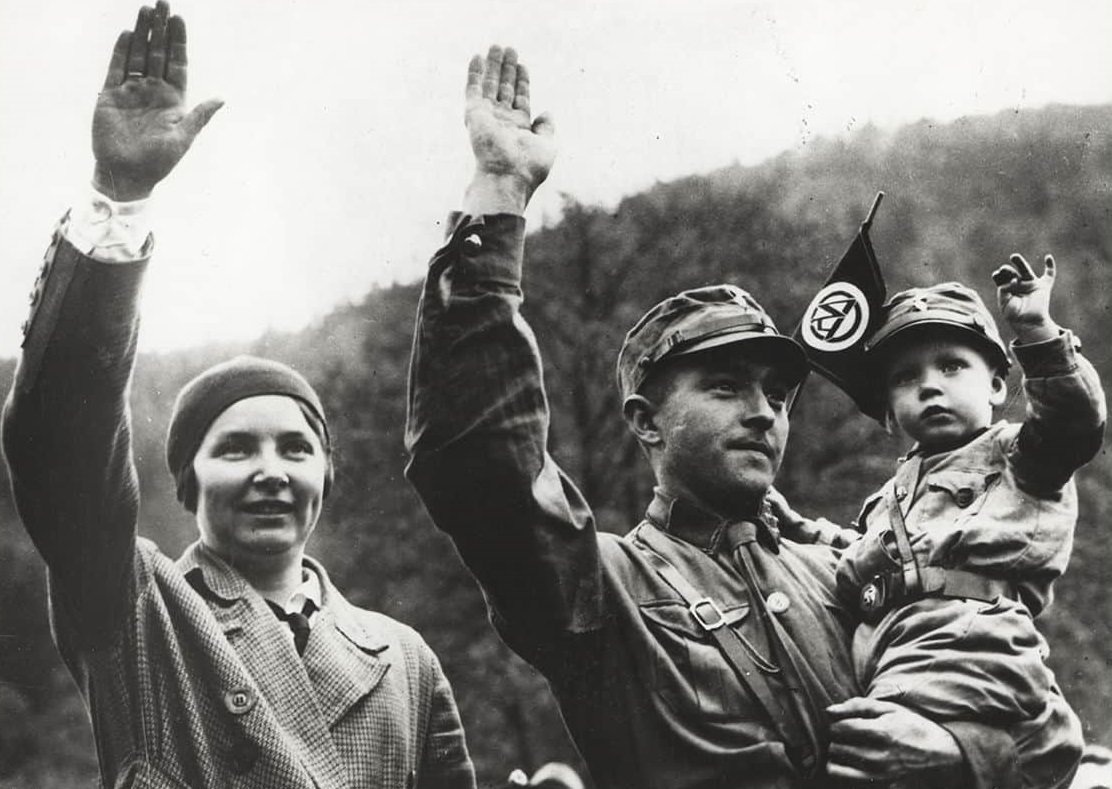
The Weimar Republic, Germany’s first experiment with parliamentary democracy, lasted only fourteen years—from the adoption of its constitution in August 1919 to the passage of the Enabling Act in March 1933 that handed absolute power to Adolf Hitler. Born in the ashes of imperial defeat in World War I, it embodied both the highest aspirations of liberal democracy and the most catastrophic vulnerabilities of modern politics. Its collapse did not occur in a single dramatic coup but through a slow erosion: economic catastrophe, constitutional flaws, political fragmentation, social polarization, and the opportunistic exploitation of crisis by extremists. Today, as democracies worldwide grapple with inflation, polarization, institutional distrust, and populist challenges, the Weimar experience remains one of the most instructive case studies in political history. Its lessons are not simplistic warnings against “fascism” but nuanced insights into how democracies die—not always by outright overthrow, but by the gradual abandonment of democratic norms when citizens lose faith in institutions.
This article examines the Weimar Republic’s rise and fall in detail before distilling its enduring lessons for the twenty-first century. It draws on historical scholarship to show that Weimar’s failure was not inevitable but the product of specific structural weaknesses compounded by external shocks and human choices. Understanding these dynamics is essential not to predict doom but to strengthen contemporary democratic resilience.
✅ Also Read: Qingdao: The German Colony in China That Lasted Only 16 Years
The Weimar Republic emerged from the chaos of November 1918. Germany’s defeat in World War I triggered the abdication of Kaiser Wilhelm II on November 9, followed by the proclamation of a republic by Social Democratic leader Philipp Scheidemann. Friedrich Ebert, head of the Majority Social Democrats (SPD), formed a provisional government amid revolutionary fervor. Workers’ and soldiers’ councils sprang up, echoing the Russian soviets, while the Spartacist League—led by Rosa Luxemburg and Karl Liebknecht—pushed for a communist revolution. The government suppressed the Spartacist uprising in January 1919 with the help of right-wing Freikorps paramilitaries, but the violence set a tone of street-level conflict that would haunt the republic.
In February 1919, the National Assembly convened not in turbulent Berlin but in the culturally prestigious city of Weimar to draft a new constitution. The resulting document, effective August 11, 1919, was remarkably progressive. It established a federal republic with universal suffrage for all adults over twenty (including women for the first time), proportional representation, strong protections for individual rights, and a powerful directly elected presidency. Article 48 granted the president emergency decree powers in times of crisis—an innovation intended to provide stability but later weaponized against democracy itself. The republic’s early leaders, including Ebert as president (1919–1925) and Gustav Stresemann as a key chancellor and foreign minister, sought to reconcile Germany with the world while building a welfare state.
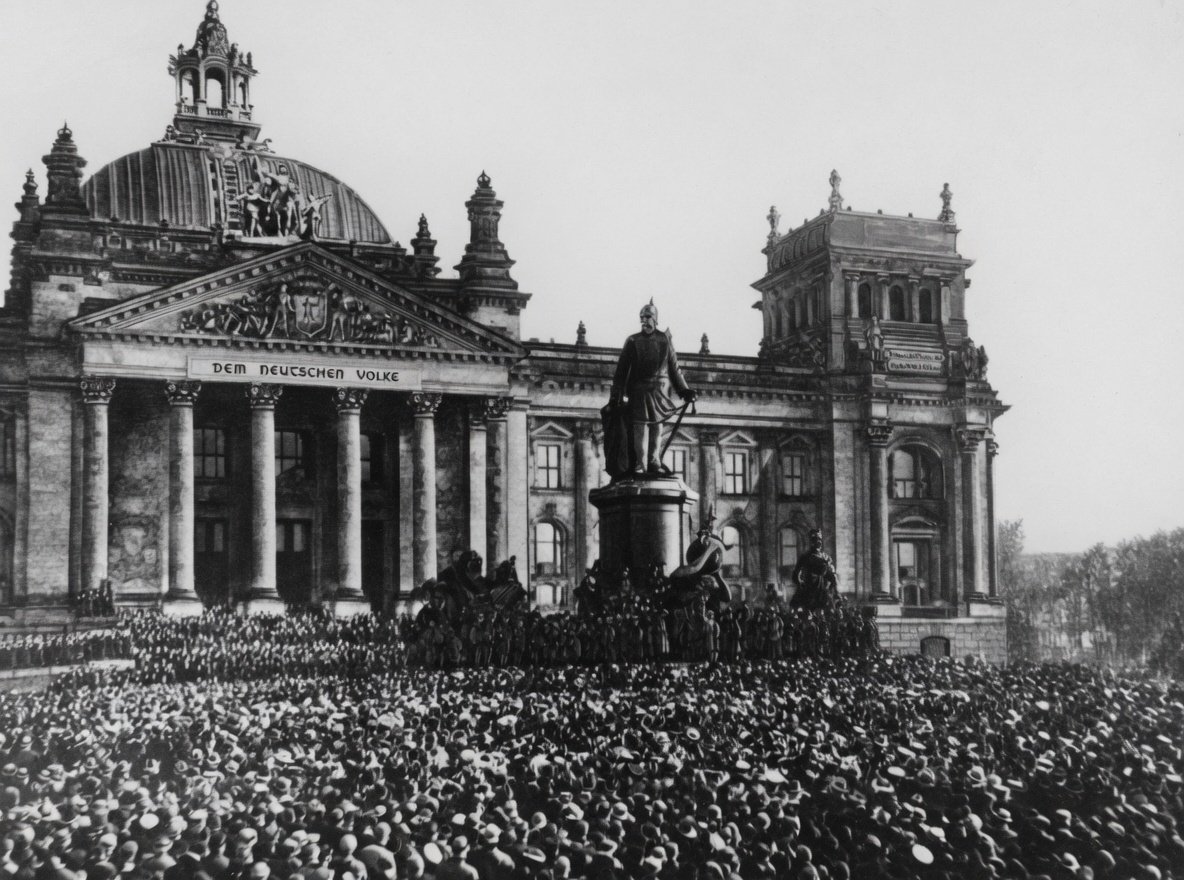
Yet the republic was burdened from birth by the Treaty of Versailles, signed in June 1919. The treaty imposed massive reparations (132 billion gold marks), territorial losses (13 percent of pre-war territory and 10 percent of population), military restrictions, and the infamous “war guilt” clause. Many Germans viewed it as a humiliating “Diktat” imposed by victors rather than a negotiated peace. The “stab-in-the-back” myth—propagated by military leaders like Paul von Hindenburg—claimed that civilian politicians, not the army, had betrayed Germany. This narrative undermined the republic’s legitimacy, branding its founders as “November criminals.”
Despite these origins, the early Weimar years saw genuine achievements. The 1920s brought cultural flourishing—Expressionism in art, Bauhaus architecture, cabaret, and scientific breakthroughs—earning the era the label of “Golden Twenties.” For outsiders and minorities, Weimar offered unprecedented freedoms. Yet beneath the surface, political instability simmered. No single party ever secured a Reichstag majority, forcing fragile coalitions. Proportional representation, while democratic, fragmented the parliament into dozens of parties, making governance inefficient.
The Weimar Constitution was both a strength and a fatal flaw. Its democratic features—universal suffrage, civil liberties, and proportional representation—reflected the era’s progressive ideals. Yet these very mechanisms created vulnerabilities. Proportional representation allowed small extremist parties to gain footholds without broad consensus, leading to chronic coalition instability. Between 1919 and 1933, Germany had twenty different cabinets, with an average lifespan of under nine months.
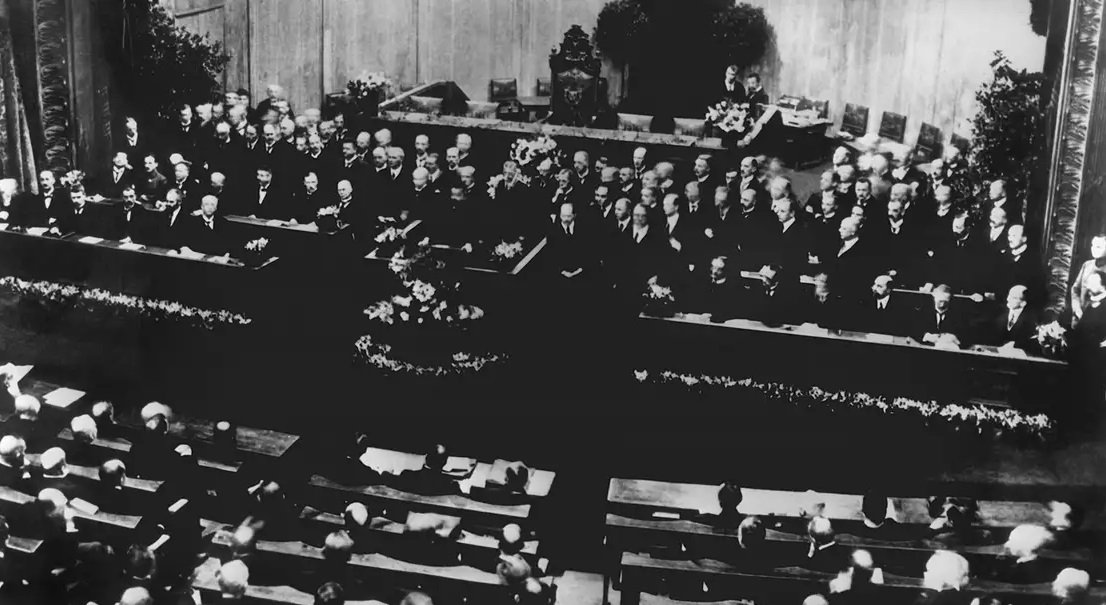
Article 48 proved especially dangerous. Intended as a temporary emergency tool, it allowed the president to bypass the Reichstag and rule by decree when “public security and order” were threatened. Ebert used it sparingly during the early crises, but President Hindenburg (elected 1925) relied on it extensively after 1930. By 1932, decrees had become the norm, hollowing out parliamentary democracy. The conservative elites—civil servants, judges, and military officers inherited from the Kaiserreich—often remained hostile to the republic, viewing it as a temporary inconvenience. This “conservative elite” influence later proved decisive in Hitler’s appointment.
Federalism added another layer of complexity. States (Länder) retained significant autonomy, sometimes clashing with the central government. The judiciary’s leniency toward right-wing violence—evident in light sentences for the 1920 Kapp Putsch participants—contrasted with harsher treatment of leftists, eroding public trust in impartial justice.
Economic mismanagement was central to Weimar’s undoing. The republic inherited massive war debts and faced reparations demands payable in gold or foreign currency. Rather than raise taxes or cut spending, successive governments printed money. The 1923 Ruhr occupation—France and Belgium’s response to missed reparations—triggered passive resistance funded by the printing press. Hyperinflation exploded: by November 1923, one U.S. dollar equaled 4.2 trillion marks. Prices doubled every few days. Workers were paid twice daily and rushed to spend before value evaporated. Middle-class savings vanished; pensioners starved. Barter and foreign currency replaced the mark. Social order collapsed amid food riots and looting.
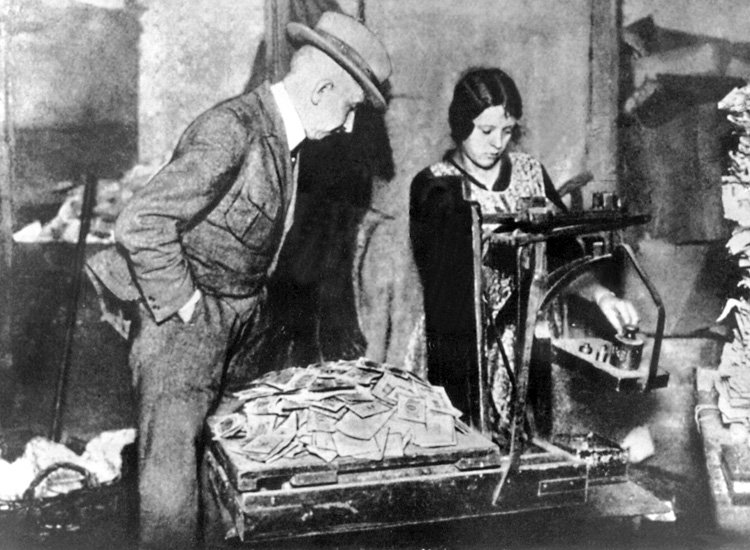
Chancellor Gustav Stresemann ended passive resistance, introduced the Rentenmark (backed by land and industrial assets), and secured the 1924 Dawes Plan, which restructured reparations and injected American loans. A brief “Golden Age” followed: industrial production recovered, unemployment fell, and cultural creativity peaked. Yet prosperity rested on shaky foundations—short-term foreign loans and continued reparations. The 1929 Wall Street Crash triggered the Great Depression. American capital fled Germany. Unemployment soared to six million (over 40 percent of the workforce) by 1932. Chancellor Heinrich Brüning’s deflationary austerity—wage cuts, tax hikes, and spending reductions—deepened the slump, implemented largely by presidential decree. Deflation, not inflation, proved the more politically toxic force in the republic’s final years.
Economic despair radicalized voters. The middle class, ruined twice (once by inflation, once by depression), turned against the republic. Farmers faced foreclosures; industrial workers joined communist or Nazi ranks. The link between economic pain and extremism was clear, though scholarly debate persists on whether hyperinflation or the Depression was more decisive. Recent research emphasizes the latter’s role in boosting Nazi support after 1930.
Weimar’s multi-party system amplified divisions. The SPD, Centre Party, and liberals formed unstable “Weimar coalitions,” while communists (KPD) and nationalists (DNVP) rejected the system outright. Street violence between communist Red Front Fighters and Nazi Stormtroopers (SA) became routine. Assassinations of prominent republicans—Matthias Erzberger (1921) and Walther Rathenau (1922)—highlighted the threat from the radical right.
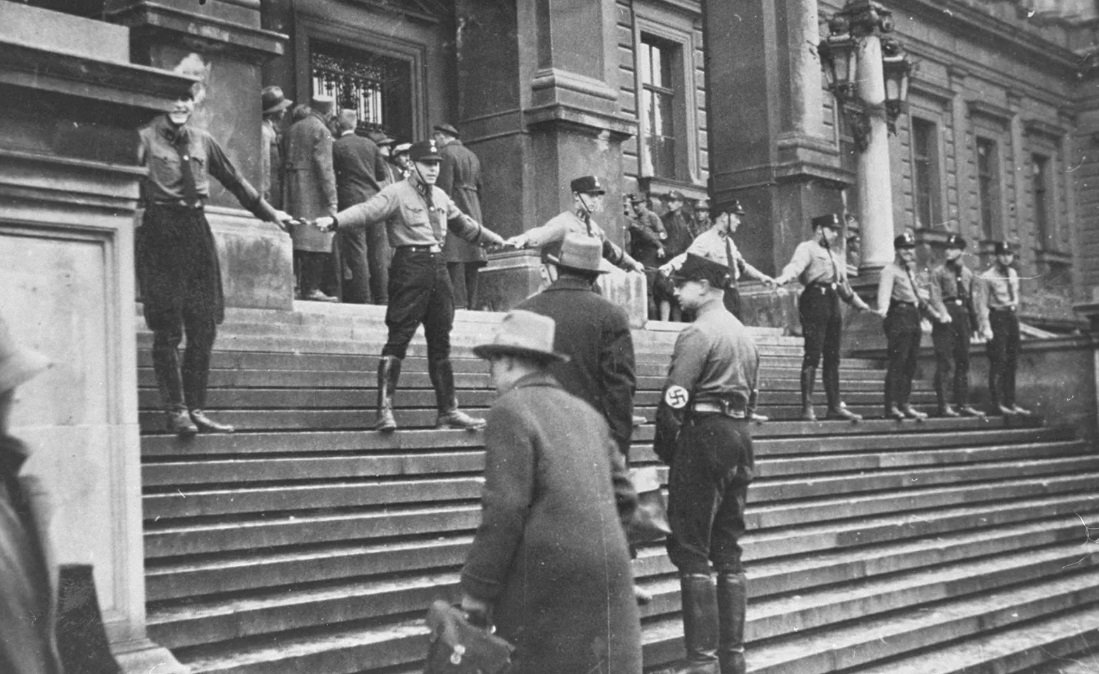
The Nazi Party (NSDAP), founded in 1919 as the German Workers’ Party and led by Hitler from 1921, remained marginal until the late 1920s. Hitler’s failed 1923 Beer Hall Putsch taught him to pursue power legally. The party’s 25-point program blended nationalism, anti-Semitism, anti-communism, and populist economics. The 1930 Reichstag elections marked the breakthrough: Nazis surged from 2.6 percent to 18.3 percent. By July 1932, they held 37.3 percent, the largest share, though still short of a majority. Communist gains further polarized parliament.
Moderate parties hemorrhaged support. Voters sought decisive action amid gridlock. Hindenburg’s presidential cabinets—Brüning (1930–32), Franz von Papen, and Kurt von Schleicher—governed by decree, sidelining parliament. Papen’s July 1932 Prussian coup dismantled a key SPD stronghold. Elite intrigue, not mass uprising, delivered power to Hitler: on January 30, 1933, Hindenburg appointed him chancellor in a coalition with conservatives, believing they could “contain” him. The Reichstag Fire (February 27) enabled the Reichstag Fire Decree, suspending civil liberties. The March 5 elections and March 23 Enabling Act completed the legal transition to dictatorship.
Weimar’s cultural vibrancy masked deeper anxieties. Peter Gay described it as an “outsider as insider” era, where Jews, women, and avant-garde artists gained prominence. Yet this modernism fueled conservative backlash. Right-wing intellectuals glorified violence and tradition; left-wing critics dismissed liberal democracy as bourgeois facade. Many intellectuals disengaged from practical politics, leaving a vacuum for demagogues. Propaganda, sensationalist media, and conspiracy theories thrived. The republic’s openness became a liability when citizens associated freedom with chaos.
Social divisions—class, religion, region, and generation—deepened. Rural Protestants leaned nationalist; urban Catholics supported the Centre Party; industrial workers split between SPD and KPD. Anti-Semitism, long latent, found fertile ground amid crisis. The republic’s failure to forge a unifying national identity left it vulnerable.
By late 1932, democracy existed in name only. Hitler’s appointment was the culmination of years of erosion. The Enabling Act passed with Centre Party support under intimidation, granting Hitler four years of decree power. Within months, opposition parties were banned, trade unions dissolved, and the one-party state established.
What are the primary lessons?
Contemporary parallels abound without exaggeration: inflation anxieties, populist surges, institutional distrust, and geopolitical tensions echo Weimar themes. Yet no two eras are identical. Weimar’s lessons urge vigilance, not fatalism. Strengthening rule of law, economic security, cross-partisan dialogue, and civic education remains the best defense.
The Weimar Republic was a noble experiment that failed tragically. Its story warns that democracy is fragile, contingent on economic health, institutional integrity, social trust, and elite responsibility. It collapsed not because Germans inherently rejected liberty but because repeated crises eroded their faith in it. The republic’s legacy endures in Germany’s post-1945 “militant democracy” and in global scholarship on democratic erosion. As we confront twenty-first-century challenges—technological disruption, climate stress, inequality, and geopolitical rivalry—we must heed Weimar’s caution: eternal vigilance is the price of liberty. Democracies do not fall overnight; they erode when citizens and leaders forget the hard-won lessons of the past. The choice, as always, belongs to us.