 11
11
Germany continues to rank among the world’s most attractive destinations for English-speaking professionals, families, entrepreneurs, and retirees. With its world-class engineering, strong social safety net, efficient public transport, universal healthcare, and enviable work-life balance, the country draws hundreds of thousands of newcomers annually from the United States, United Kingdom, Canada, Australia, New Zealand, and Ireland. Whether you arrive on an EU Blue Card, a job-seeker visa, or as a digital nomad with remote income, one question inevitably arises early in your relocation journey: should you rent or buy property?
Germany remains a “nation of renters” in the truest sense. Homeownership rates hover between 43% and 50% nationwide, dramatically lower than in the United Kingdom (around 65%), the United States (approximately 65%), Australia (67%), or Canada (68%). This is not a reflection of economic weakness but of deliberate policy choices, cultural norms, and structural incentives that make long-term renting feel safe, predictable, and often financially rational. Tenant protections are among the strongest in Europe, rent increases are tightly regulated in most urban areas, and transaction costs for buying remain high. Yet the market is evolving. After the post-pandemic price surge and subsequent 2022–2024 correction, German property values have stabilized and begun modest recovery. National apartment prices now average between €3,400 and €4,300 per square meter, while single-family houses sit around €2,950 per square meter. In premium locations such as Munich, prices can exceed €7,000–€10,500 per square meter for new constructions, whereas more affordable eastern cities or smaller towns offer entry points at €2,000–€3,000 per square meter.
Rental prices have continued their upward trajectory, rising approximately 5.2% nationally through late 2025, though new-build rents have shown slight stagnation amid economic caution and higher construction costs. A typical one-bedroom apartment in a city center now costs between €865 and €1,200 on average across the country, but you should budget €1,500 or more in Munich, €1,200–€1,300 in Berlin or Frankfurt, and well under €700 in emerging hubs like Leipzig or Dresden. Mortgage interest rates for the standard 10-year fixed term (the German norm) currently range from 3.5% to 4%, higher than the ultra-low rates of the early 2020s but still historically moderate and highly predictable. Analysts project 3–4% national price growth, supported by chronic undersupply—Germany completes only about 200,000 new housing units per year against an estimated annual need of 400,000. No major bubble is expected; instead, prices remain mildly elevated relative to rents but underpinned by solid fundamentals.
For English-speaking audiences, understanding this market is essential because housing decisions directly impact your integration, financial health, and long-term plans. Short stays of fewer than five to seven years almost always favor renting. Longer horizons—especially ten years or more—can tilt the balance toward ownership if you have sufficient capital and stability. This article provides an exhaustive, data-driven comparison tailored specifically to expats. We will explore costs, legal frameworks, financing mechanics, regional nuances, tax implications, cultural considerations, and practical step-by-step processes. By the conclusion, you will possess a clear decision-making framework customized to your personal timeline, risk tolerance, family situation, and career trajectory in Germany.
✅Also Read: Types of Trains in Germany: A Comprehensive Guide to ICE, IC, RE, and S-Bahn
To make an informed choice, it is crucial to grasp the macroeconomic and regulatory backdrop. Germany’s housing market has matured into a model of stability rather than speculation. Unlike the more volatile property cycles in the United Kingdom or the United States, German prices have historically grown in line with wages and inflation over decades. The country benefits from strict building regulations, high construction quality, and a federal system that delegates significant planning power to municipalities. This creates regional diversity but also persistent supply shortages in high-demand metropolitan areas.
Demographic trends further shape the market. An aging population, continued immigration (net migration remains positive), and urbanization drive demand in the west and south while eastern states still offer relative affordability. Energy-efficiency standards have tightened dramatically under the Gebäudeenergiegesetz (Building Energy Act), meaning older properties require costly retrofits, while new builds command premium prices but lower long-term operating costs. Government policies continue to favor tenants: the Mietpreisbremse (rent brake) caps new rental contracts at no more than 10% above local reference rents in tight markets, and annual increases are limited to inflation plus a small margin (typically 2–3%). Evictions are extremely difficult without proven cause, and indefinite contracts dominate the rental landscape.
On the ownership side, the market is supported by conservative lending practices. Banks require thorough credit checks via the Schufa system, proof of stable income, and often loan-to-value ratios of 60–80% for non-residents. Property transfer tax (Grunderwerbsteuer) varies by federal state from 3.5% in Bavaria to 6.5% in North Rhine-Westphalia, adding significantly to closing costs. Notary fees and land-registry charges add another 1.5–2%, while real-estate agent commissions (often 3.57% including VAT) are frequently split but still represent a notable expense. For expats, currency fluctuations (especially for those earning in USD, GBP, or CAD) and anti-money-laundering scrutiny on large transfers add extra layers of complexity.
Looking ahead to the remainder of the decade, several factors will influence the rent-versus-buy equation. Interest rates are expected to remain in the 3–4.5% range barring major ECB policy shifts. Housing construction is gradually accelerating thanks to federal subsidies and relaxed zoning in some states, but bureaucracy and labor shortages in the building sector will keep supply constrained. Climate-adaptation requirements and rising insurance premiums for flood-prone areas (particularly in western Germany) are emerging cost drivers. For English-speaking investors, Germany also offers attractive rental yields of 3.5–4.5% in secondary cities, making buy-to-let strategies viable for those with longer-term horizons and local tax advice.
Renting remains the default choice for the majority of Germans and most newly arrived expats—and for compelling reasons. The process is relatively straightforward, the legal protections robust, and the financial commitment low. Upfront costs are limited to a refundable security deposit (Kaution) of two to three months’ rent plus the first month’s rent in advance. There are no stamp duties, notary fees, or large down payments required.
Tenant rights form the backbone of the system. Contracts are typically indefinite, with tenants able to terminate with just three months’ written notice. Landlords cannot evict without legitimate grounds such as repeated non-payment or the landlord’s own proven personal use of the property, and even then the process can take months or years through the courts. Rent increases are capped, and landlords bear responsibility for structural maintenance, major repairs, and compliance with energy standards. In practice, this creates a sense of home security that many expats describe as liberating compared to more landlord-friendly markets like the United States or United Kingdom.
That said, renting is not without drawbacks. Competition in popular cities is fierce. Listings on platforms such as Immobilienscout24, Immowelt, or the classifieds site Kleinanzeigen often receive dozens of applications within hours. Landlords demand extensive documentation: a Schufa credit report (obtainable for free through certain banks or online services), proof of income equivalent to at least three times the monthly rent, an employment contract, passport or residence permit, and sometimes a guarantor. Viewings require punctuality and professionalism; many applicants prepare short “application dossiers” highlighting their stability and cleanliness.
Rental contracts are almost always in German and must be read carefully. The distinction between Kaltmiete (cold rent, excluding utilities) and Warmmiete (warm rent, including heating and some operating costs) is critical. Expats frequently underestimate additional monthly expenses: electricity, internet, water, waste collection, and broadcasting fees (Rundfunkbeitrag) can add €200–400 depending on apartment size and energy efficiency. Unfurnished rentals predominate, so newcomers often invest in IKEA or similar setups. Pets, subletting, or significant renovations generally require explicit landlord approval.
Real-life budgeting examples illustrate the range. In Berlin, a modern 70-square-meter two-bedroom apartment in a desirable neighborhood might command €1,100 cold rent plus €300 utilities, totaling around €1,400 monthly. Over five years, that equates to roughly €84,000 paid in rent with zero equity accumulated—but complete freedom to relocate if your job or family circumstances change. In Munich, the same apartment could exceed €1,800 monthly, pushing annual housing costs above €21,000. In contrast, Leipzig offers comparable space for under €900 total, making renting feel almost luxurious on mid-level salaries.
For families, shared accommodation (Wohngemeinschaften or WGs) provides an affordable entry point during the first year, while couples or professionals often transition quickly to private rentals. Digital nomads and short-term workers can use platforms like HousingAnywhere or temporary furnished apartments through corporate relocation services, though these carry higher premiums.
Purchasing property represents a major milestone for many expats, offering the opportunity to build equity, customize a living space, and potentially benefit from appreciation and rental income. Mortgage payments effectively function as a form of forced savings, and after the initial high transaction costs, monthly outlays can become comparable to or lower than renting over time.
However, the barriers are real and often underestimated by newcomers. Total buyer-side transaction costs (Kaufnebenkosten) typically range from 8% to 15% of the purchase price. This includes property transfer tax (3.5–6.5%), notary and land-registry fees (1.5–2%), and agent commissions. On a €400,000 property, expect an additional €32,000–€60,000 in cash on top of the down payment. Non-EU citizens face stricter financing rules: banks often require 20–40% equity, permanent residency or long-term contracts, and detailed proof of funds. Self-employed individuals or those on temporary visas encounter additional hurdles.

Key advantages include full control over renovations, the ability to install solar panels or modern heating systems for energy-cost savings, and tax benefits for investment properties. Primary residences enjoy capital-gains tax exemption after two years of occupancy. Fixed-rate mortgages (typically 10–15 years, extendable to 30) provide payment certainty even if market rates rise. In a 3–4% annual appreciation scenario, a €400,000 apartment could gain substantial value over a decade, creating meaningful net worth.
The buying process is formal and notary-driven. After finding a suitable property and obtaining financing pre-approval, an offer is made (usually subject to financing and inspection). Once accepted, a notary—acting as a neutral public official—prepares the purchase contract in German. Both parties sign, followed by a statutory cooling-off period. At closing, the buyer pays the remaining balance plus taxes, and ownership transfers via entry into the land register (Grundbuch). The entire process from offer to keys typically spans 6–12 weeks.
Ongoing ownership costs include annual property tax (Grundsteuer, usually 0.26–1% of assessed value), building insurance, maintenance reserves (budget 1% of property value yearly), and utilities. Older buildings may require unexpected investments in insulation or heating upgrades to meet new efficiency standards.
Let us examine concrete numbers using a realistic case study: an 80-square-meter apartment in a mid-tier city such as Cologne, Stuttgart, or Hamburg priced at €400,000. Comparable market rent is €1,200 cold plus €350 utilities, totaling €1,550 monthly.
Scenario A – Renting for 10 years: Cumulative outlay approximately €186,000. You retain liquidity to invest the would-be down payment elsewhere (assume a diversified portfolio returning 5–7% annually after inflation). No equity is built, but you avoid maintenance surprises and retain full mobility.
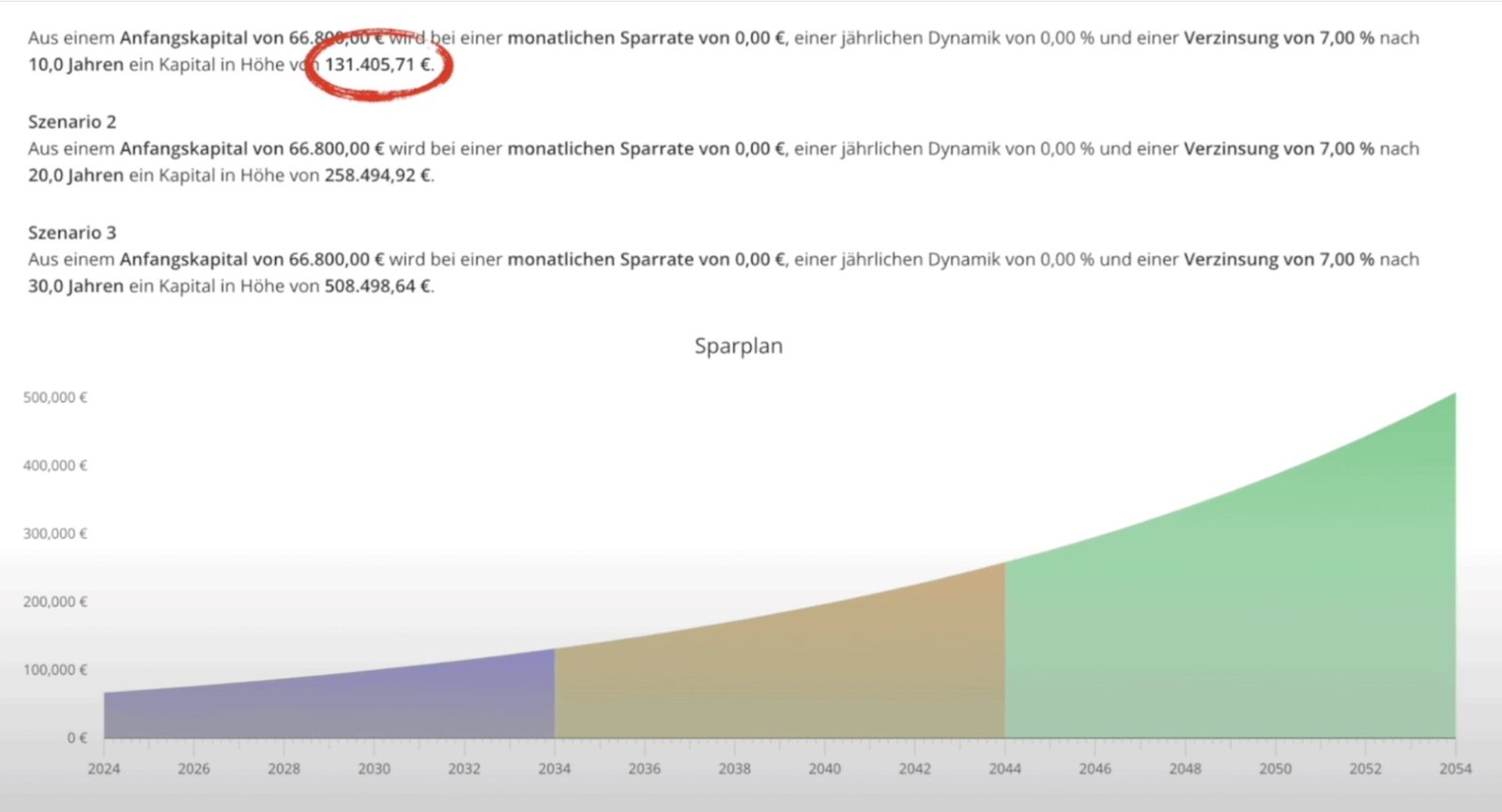
Scenario B – Buying: 20% down payment (€80,000) plus 12% transaction costs (€48,000) equals €128,000 upfront capital. A €320,000 mortgage at 3.8% fixed for 10 years generates roughly €1,450 monthly principal and interest, plus €300 for taxes, insurance, and maintenance, totaling €1,750 monthly. After 10 years you would have paid down significant principal, accumulated roughly €150,000 in equity, and—if prices rise 3% annually—own an asset worth approximately €537,000. After selling costs, net wealth creation versus renting exceeds €200,000 in most models.
Break-even analysis shows that buying typically surpasses renting after 7–10 years in stable markets, with the advantage widening dramatically over 15–20 years. Opportunity cost of tying up capital is the critical variable: if your alternative investments outperform property appreciation plus rental savings, renting wins short-term. Online calculators from providers such as Hypofriend or Interhyp allow personalized modeling incorporating your exact income, location, and rate assumptions.
Tax treatment further favors ownership for investment properties, where interest, depreciation, and maintenance are deductible against rental income. Primary residences lack mortgage-interest deductibility (unlike in the United States), but the stability and equity buildup often compensate.
Germany’s federal structure creates pronounced regional variations that can swing the rent-versus-buy decision.
Munich and southern Bavaria represent the most expensive segment: rents frequently exceed €1,500–€2,500 for family-sized units, purchase prices top €7,000 per square meter, yet job opportunities in automotive, tech, and finance are abundant. Long-term ownership here can generate outsized returns but demands substantial capital.
Berlin offers a more dynamic, still-relatively-affordable environment for creative and tech professionals. Rents around €1,200 and prices of €4,000–€6,000 per square meter make first-time buying accessible, especially in emerging neighborhoods.
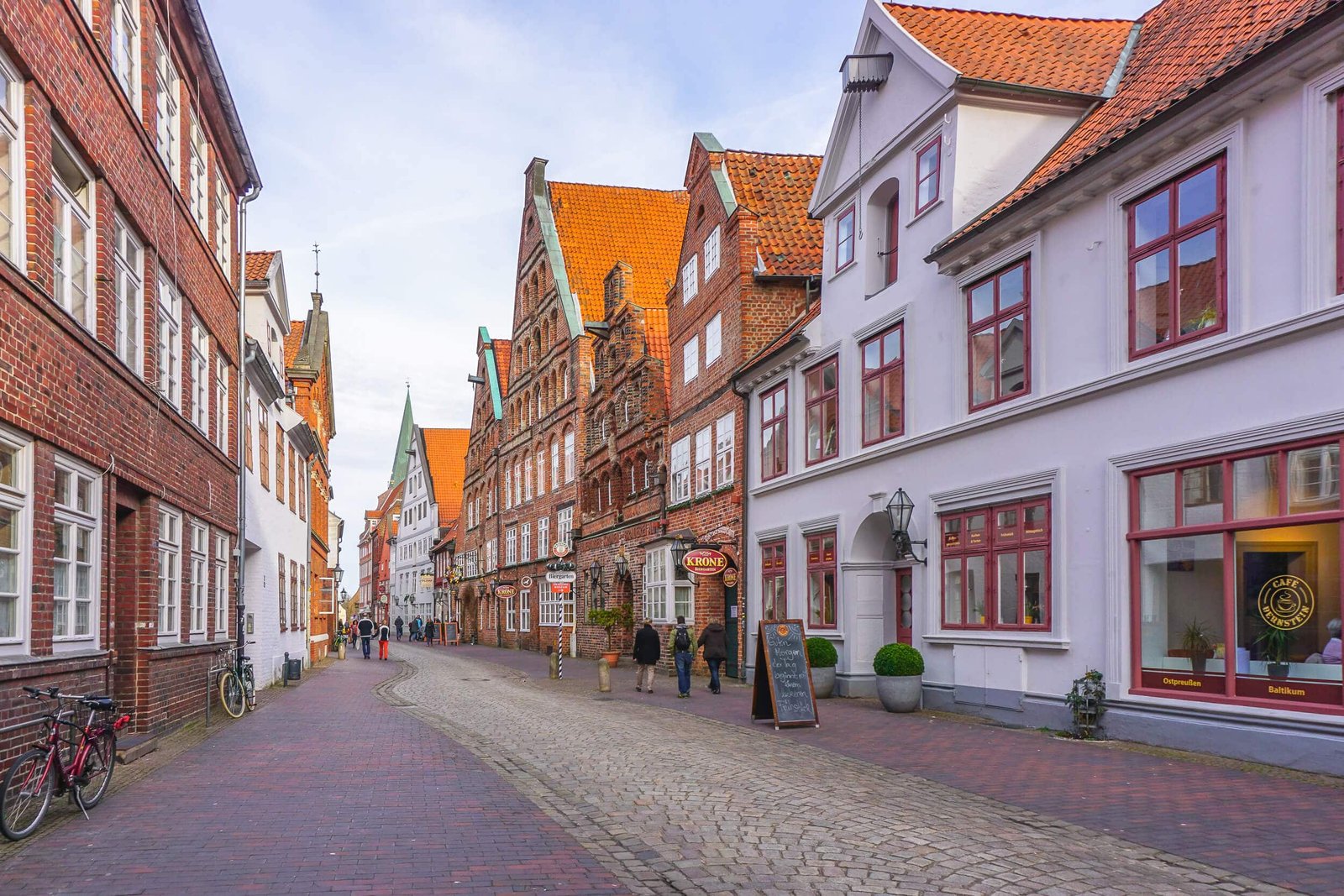
Frankfurt and the Rhine-Main area combine finance-sector salaries with solid rental yields, while Hamburg balances port-city lifestyle and moderate costs. Eastern cities such as Leipzig, Dresden, and Jena provide the most attractive entry points—rents below €800 and purchase prices around €2,500 per square meter—coupled with improving infrastructure and growing international communities.
Suburban and rural locations can reduce costs by 30–50% but may increase commuting times and limit access to international schools or English-speaking services.
Success hinges on preparation. Secure your residence permit or Blue Card before committing financially. Engage English-speaking notaries, mortgage brokers, and tax advisors (Steuerberater) early—many operate in major cities and online. Build a strong Schufa score by opening a German bank account and paying bills promptly.
Language remains a factor: although many real-estate portals have English interfaces, contracts and official correspondence are in German. Professional translators or bilingual agents mitigate risk. Understand energy certificates (Energieausweis) and house rules (Hausordnung). Budget for relocation services if your employer does not cover them.
For investors, buy-to-let requires careful calculation of net yields after tax and management fees. Non-residents should consult double-taxation treaties with their home countries.
Policy debates around housing affordability, additional construction incentives, and potential softening of tenant protections continue. Climate goals will drive demand for energy-efficient properties. Interest-rate normalization and possible ECB rate cuts later in the decade could improve affordability.
In Germany, there is no universal “correct” choice between renting and buying. Renting delivers unmatched security, flexibility, and low barriers—ideal for mobile professionals, early-career expats, or those uncertain about long-term plans. Buying rewards commitment with equity growth, personalization, and financial stability for those settled for a decade or more.
Assess your situation honestly: How many years do you realistically envision staying? What is your risk tolerance and available capital? Run the numbers using current local data, consult independent financial and legal professionals, and align the decision with your lifestyle and family needs. Germany’s housing market rewards informed, patient choices. Whichever path you select, you are investing in a country renowned for stability, opportunity, and quality of life. With thorough research and professional support, your housing decision can become one of the most rewarding aspects of your German adventure.