 11
11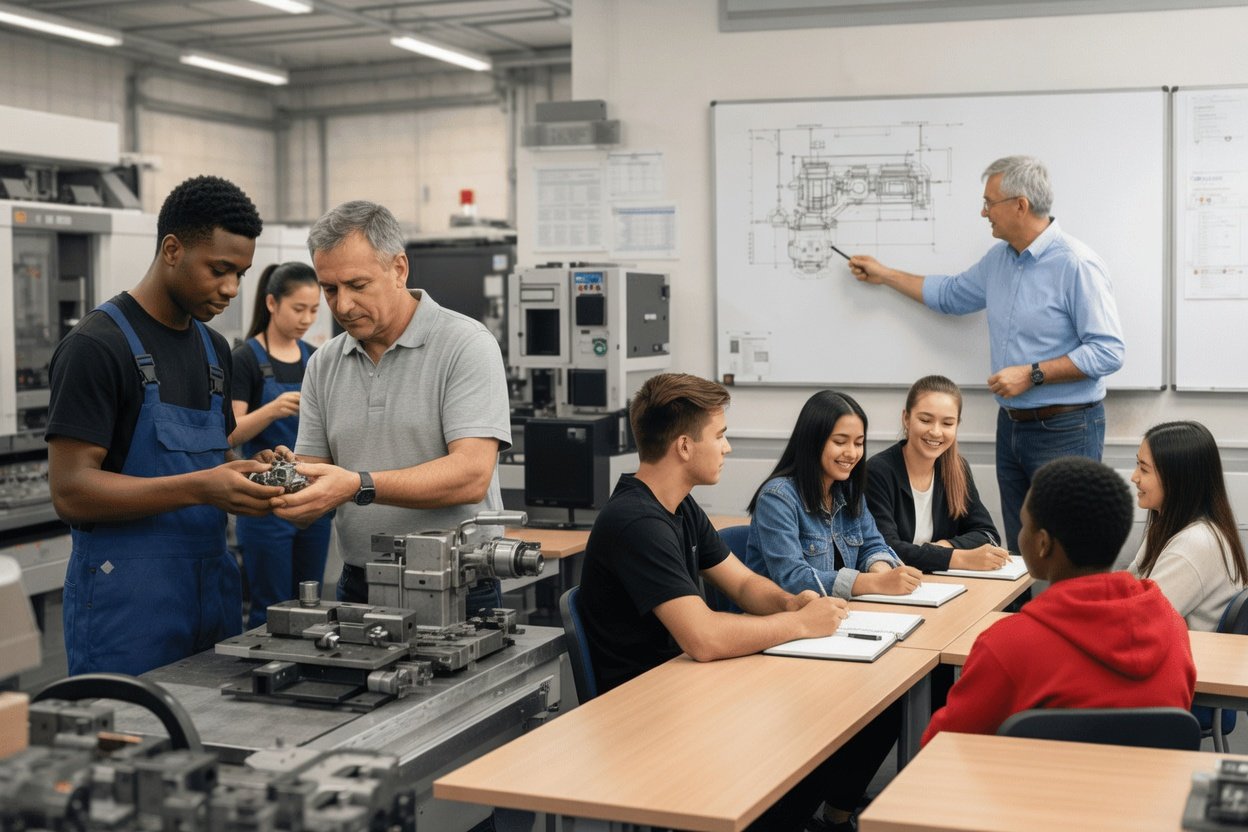
Germany’s secondary education system stands out globally for its long-standing tradition of early differentiation. Shortly after primary school, most students are directed into different educational tracks based on academic performance, teacher recommendations, and parental choice. The three classic pillars of this differentiated model are the Gymnasium, the Realschule, and the Hauptschule.
Although the rigid tripartite system has been significantly softened in recent decades through the expansion of comprehensive Gesamtschulen and multi-track schools, these three types continue to represent distinct philosophies of education. They shape not only academic pathways but also long-term career opportunities and social mobility across Germany’s 16 federal states (Länder). This article offers a thorough, updated analysis, covering historical roots, structure, curriculum, qualifications, post-school routes, student demographics, equity challenges, reforms, and societal implications.
✅Also Read: Technical Education: Why the German Model Works Better Than Others
The German secondary system traces its origins to the 19th century. The Gymnasium was established as the premier academic track, inspired by Wilhelm von Humboldt’s concept of Bildung — holistic personal and intellectual cultivation through rigorous study of classical languages, literature, philosophy, history, and sciences. It aimed to prepare an elite for university studies and leadership roles in law, medicine, theology, and public administration.
The Realschule emerged during industrialization as a practical alternative. It emphasized modern languages, mathematics, natural sciences, and commercial subjects, serving the growing middle class and preparing students for technical and business careers without the full classical rigor of the Gymnasium.
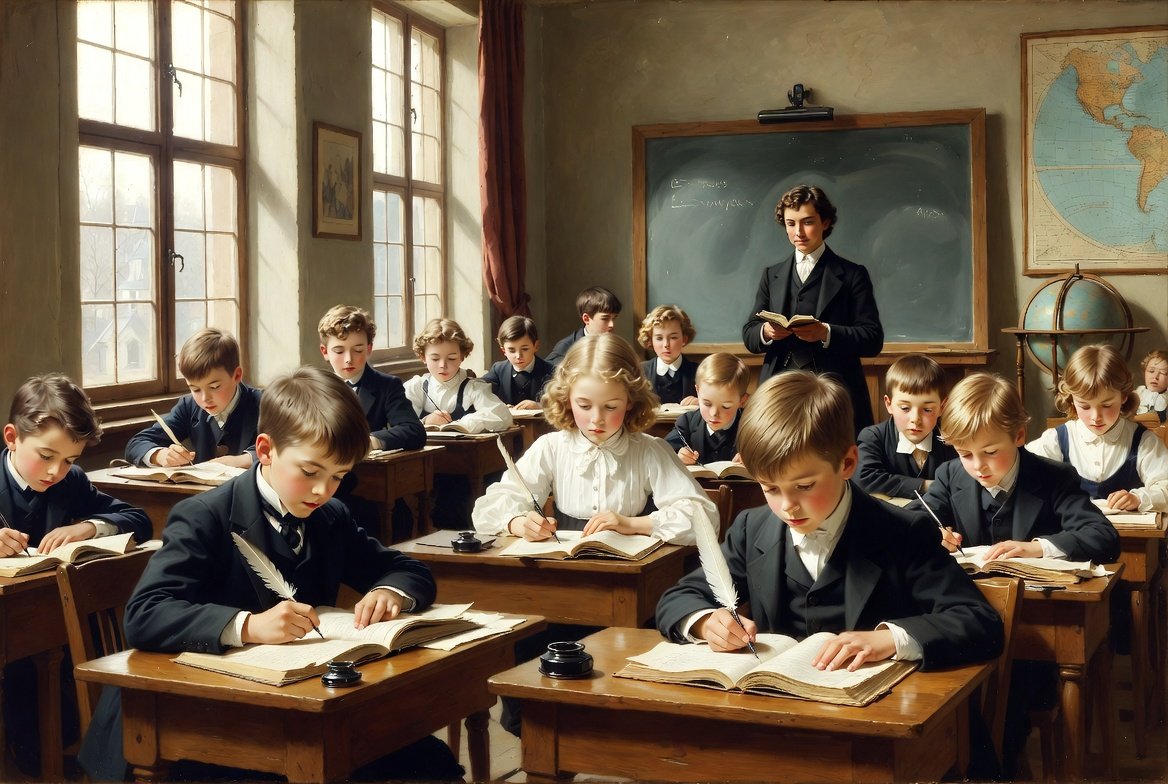
The Hauptschule (historically linked to the Volksschule) was designed for the working-class majority. It provided essential general education combined with strong practical and vocational orientation to prepare students for apprenticeships in crafts, industry, and trades.
Post-World War II, West Germany refined this differentiated model to balance excellence with social mobility. East Germany maintained a more unified polytechnic approach. After reunification in 1990, the Western structure largely prevailed, but education policy remains a state responsibility, leading to notable regional differences.
Since the early 2000s PISA “shock,” which highlighted equity issues and performance gaps, many Länder have moved toward greater integration. By 2026, standalone Hauptschulen and Realschulen exist in significant numbers primarily in conservative southern states such as Bavaria and Baden-Württemberg. In most other regions, they have been largely integrated into multi-track schools (Schularten mit mehreren Bildungsgängen) or replaced by comprehensive models.
Secondary education typically begins after four years of Grundschule (grades 1–4, ages 6–10). In Berlin and Brandenburg, primary school lasts six years.
According to the latest national averages for students in grade 8 (KMK data around 2023–2025):
The Hauptschule has experienced a dramatic decline. Its share among school leavers in the general track fell from about 50% in 2000 to around 20% by 2024, as many states have consolidated vocational-oriented pathways into broader structures.
Typical Duration:
Grades 5 and 6 often serve as an orientation phase (Orientierungsstufe), allowing some flexibility for track changes based on performance, although upward mobility (e.g., from Hauptschule to Gymnasium) remains limited in practice.
| Aspect | Gymnasium | Realschule | Hauptschule |
|---|---|---|---|
| Main Focus | Academic / Theoretical | Intermediate / Applied | Practical / Vocational |
| Duration | 8–9 years (to grade 12/13) | 6 years (to grade 10) | 5 years (to grade 9, often +1) |
| Typical Exit Age | 18–19 | 16 | 15–16 |
| Key Qualification | Abitur (Allgemeine Hochschulreife) | Mittlerer Schulabschluss | Hauptschulabschluss / Erster Schulabschluss |
| Primary Pathway | University studies | Higher vocational training / Apprenticeship | Dual vocational apprenticeship |
| Approx. Enrollment | ~36–37% | ~17% | ~8% |
All schools follow state-mandated core subjects: German, Mathematics, English (plus often a second foreign language), Biology, Chemistry, Physics, History, Geography, Social Studies, Arts, Music, and Physical Education. Differences lie in depth, pace, methodology, and emphasis.
Gymnasium The most rigorous and theoretical track. It prioritizes abstract thinking, critical analysis, advanced problem-solving, and deep subject mastery. Extensive work in languages and literature, rigorous mathematics and sciences, and opportunities for advanced courses (Leistungskurse) in upper secondary. Teaching encourages independent research, debate, and intellectual curiosity. Vocational content is minimal; the goal is broad Bildung for higher education.
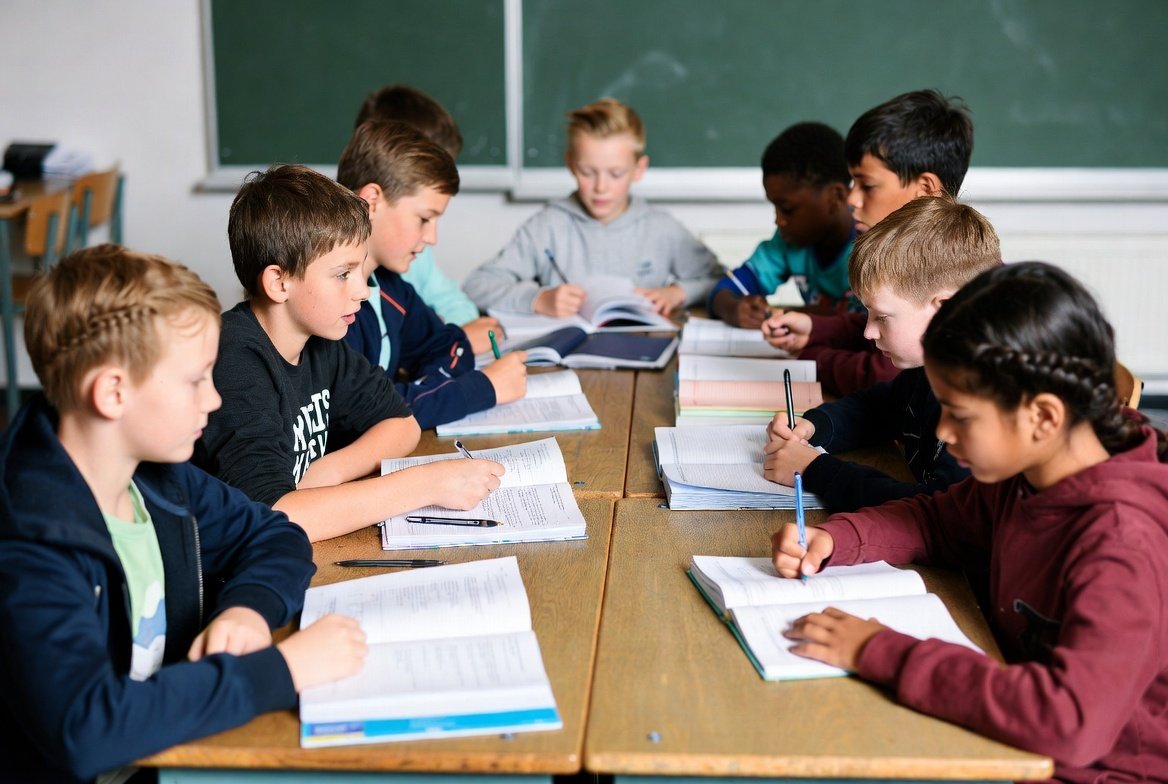
Realschule A balanced intermediate path. More applied than the Gymnasium yet more demanding than the Hauptschule. Stronger focus on modern languages, technology, economics, business basics, and practical projects. Group work and real-world applications are common. Students may choose focus areas (technical, economic, or social). It prepares graduates for mid-level technical, commercial, or administrative careers or further vocational education.
Hauptschule Highly practical and vocationally oriented. Core subjects are taught at a supportive pace with additional repetition and individualized assistance. Significant integration of hands-on learning, technology workshops, career guidance (Arbeitslehre), and internships. Emphasis on social competencies and basic skills needed for immediate entry into the workforce. Smaller classes and extra support help students who may face learning challenges.
Grading follows the uniform German scale (1 = very good to 6 = insufficient), but performance expectations and average results differ across tracks due to selection effects.
The exit qualifications define future options:
These certificates embody Germany’s philosophy: early differentiation aims to align education with individual strengths while efficiently supplying both academic professionals and highly skilled workers to the economy.
Germany’s world-renowned dual vocational training system (duale Ausbildung) is tightly connected to these tracks:
The system offers second-chance pathways: motivated students from lower tracks can upgrade qualifications later through evening classes, Fachoberschule, or other programs. Nevertheless, the initial track choice exerts a strong influence on long-term outcomes.
Socioeconomic background remains correlated with track placement. Children from academic or higher-income families are overrepresented in Gymnasium, while those from working-class or migrant backgrounds are more likely to attend Realschule or Hauptschule tracks.
Critics argue that selection around age 10 is too early, potentially perpetuating inequality, especially when teacher recommendations carry significant weight. Proponents emphasize that tailored instruction reduces frustration for less academic students and allows high-achievers to progress at an appropriate pace — contributing to Germany’s strong economy and relatively low youth unemployment.
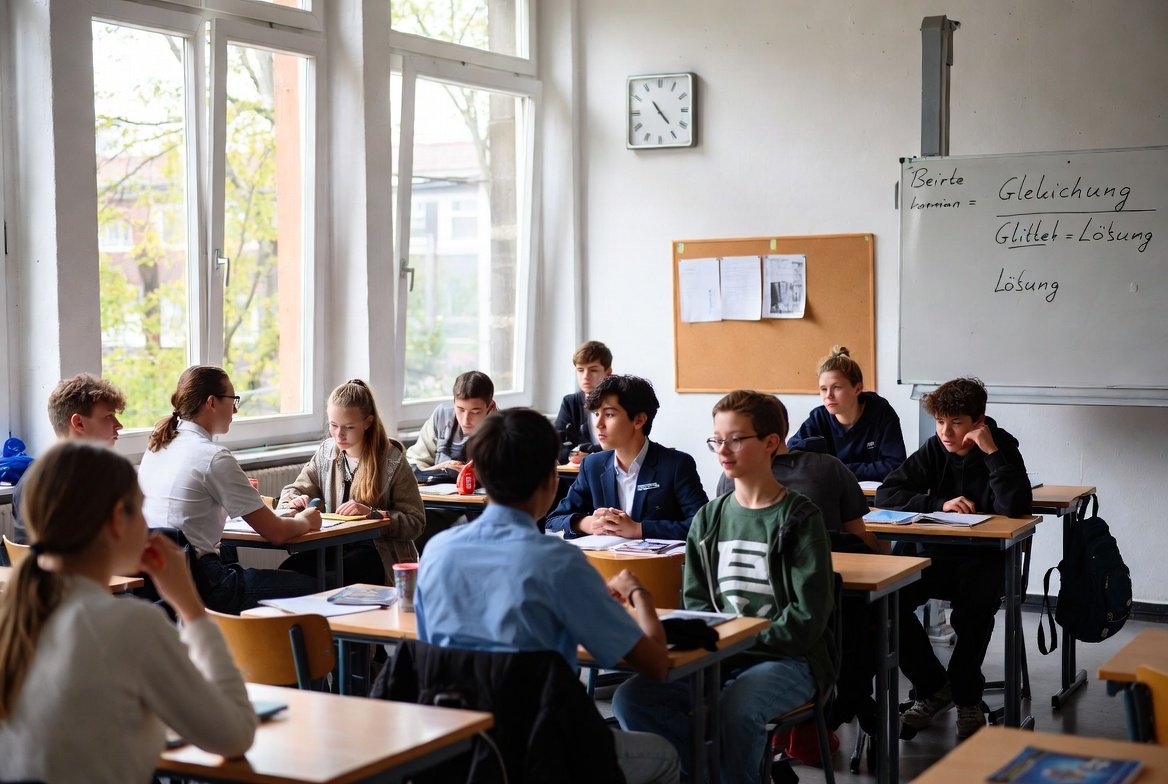
PISA results and national studies continue to show achievement gaps linked to social background and migration status. Comprehensive schools (Gesamtschulen) seek to mitigate this by delaying or blurring tracks, enabling students to achieve any qualification — including the Abitur — within one institution.
Additional challenges in 2026 include adapting to digitalization, supporting inclusion of students with special needs, integrating refugees, addressing teacher shortages, and responding to declining basic skills in mathematics, reading, and science observed in recent PISA cycles.
Reforms since the 2000s have focused on increasing permeability between tracks, expanding all-day schooling, strengthening early language support, and improving equity through programs such as the Startchancen-Programm (targeting disadvantaged schools with significant federal and state investment).
In December 2024, the Standing Conference of Ministers of Education published updates on revised educational standards and greater comparability across Länder. Many states continue shifting toward two- or three-path models rather than the classic tripartite structure. The dual vocational system remains a cornerstone strength, helping Germany maintain one of Europe’s lowest youth unemployment rates.
In German society, school type still carries subtle prestige signals: Gymnasium suggests academic ambition and future leadership; Realschule represents reliable, practical competence central to the Mittelstand; Hauptschule, though essential for vocational pipelines, sometimes faces lingering stigma despite renewed appreciation for skilled trades amid labor shortages.
Compared to comprehensive systems in countries like the United States, United Kingdom, or Scandinavia, Germany’s model prioritizes early specialization and labor-market alignment. It excels at producing both top academics and highly skilled professionals but requires constant attention to fairness and mobility.
The differences between Gymnasium, Realschule, and Hauptschule reflect Germany’s pragmatic educational philosophy: matching diverse abilities and interests to tailored learning environments rather than enforcing uniformity.
While the traditional tripartite model has become more flexible and inclusive, its core idea — differentiated yet permeable pathways — continues to define German secondary education in 2026. Its greatest strength lies in producing a highly trained workforce; its biggest ongoing challenge is ensuring that early decisions do not permanently limit opportunities for capable students from all backgrounds.
For parents, educators, international families, or policymakers, understanding these distinctions is essential. No single track is universally superior — success depends on the child’s individual strengths, motivation, support system, and the specific opportunities available in their Land.
As Germany navigates demographic shifts, digital transformation, and equity demands, its secondary system will likely evolve further. Yet the fundamental balance between academic excellence, practical skills, and economic relevance remains a valuable model for how education can serve both individual potential and societal needs.